
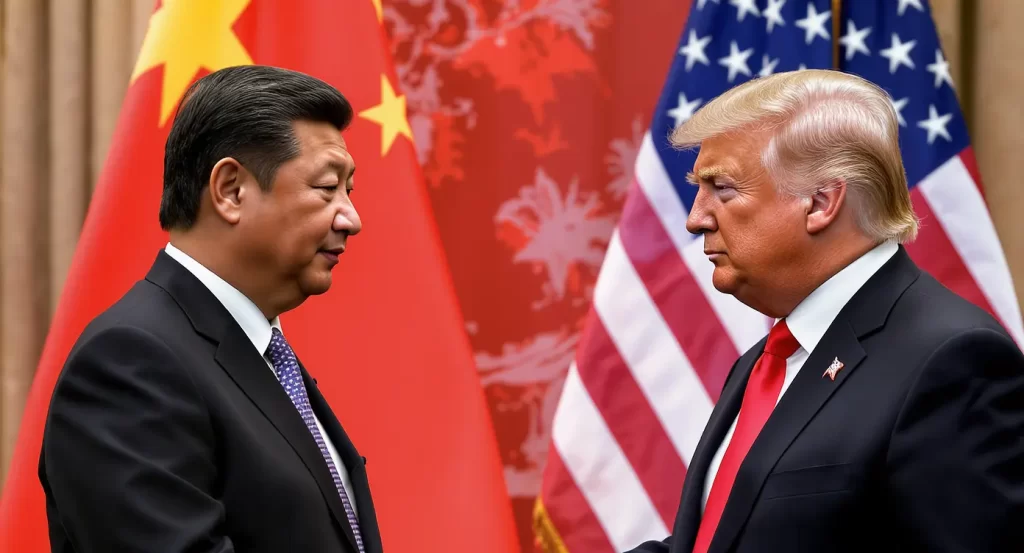
The Global War for Talent Just Changed Forever. Are You Ready For China’s K Visa?
The game has changed.
For decades, the path for the world’s brightest minds was simple: get an H-1B visa and move to the United States. It was the undisputed ticket to a career at the forefront of innovation.
That era is over.
A seismic shift is underway, and it’s creating a massive divergence in how global superpowers attract top talent. The U.S. is building walls, while China is building bridges. This isn’t just a policy tweak; it’s a fundamental change in the global competition for human capital.
If you’re a STEM professional, an innovator, or an entrepreneur, the choices you make right now will define your future. This is not the time to follow the old playbook. It’s time to understand the new landscape.
Key Takeaways: What You Need to Know NOW
- The U.S. H-1B Visa Is Becoming a Trap: A proposed $100,000 fee for new H-1B petitions threatens to lock out anyone who isn’t sponsored by a tech giant. This turns the visa from an opportunity into a pair of golden handcuffs.
- China’s K Visa Is a Game-Changer: Launching October 1, 2025, this new visa requires NO employer sponsorship. It’s a direct invitation to young, independent STEM professionals to innovate freely.
- The Power Has Shifted to YOU: The H-1B’s decline has opened the door for countries like Canada and the UK to roll out the red carpet. You now have a menu of options, not a single, difficult path.
- Your Career Strategy Must Evolve: Relying solely on the U.S. is no longer a viable plan. A diversified, global approach to your career is now essential for long-term success.
- Freedom vs. Stability: The new choice for global talent is between the H-1B’s rigid, employer-controlled path to a Green Card and the K-visa’s immediate freedom to create and innovate.
- Startups and Universities Are Hit Hardest: The H-1B fee will devastate smaller companies and research institutions, drastically reducing opportunities for innovation in the U.S.
- This Is a Strategic Play by China: The K visa is a long-term investment in building the next Silicon Valley on its own soil. It’s not about filling jobs; it’s about cultivating the next generation of tech leaders.
What you’ll find on this page
Table of Contents
Why the Old H-1B Playbook Is Broken
Let’s be honest. The H-1B visa has always been a tough road. It’s an employer-sponsored system, meaning a company has to petition for you. You’re tied to them.
The process is a bureaucratic nightmare:
- Labor Condition Application (LCA): The employer proves they’re paying you a fair wage.
- Form I-129 Petition: They formally ask the government to hire you.
- The Lottery: Demand for H-1B visas is so high that your chance of even being considered is left to a random lottery.
This system was designed to fill labor shortages, not to attract the world’s most innovative people. It’s transactional. You are a cog in a corporate machine.
And now, it’s about to get so much worse.
The proposed $100,000 fee on new H-1B petitions is a tariff on talent. While big tech companies like Google or Amazon might swallow the cost for a few top executives, it’s a death blow for everyone else.
- Startups? They can’t afford it.
- Universities and research labs? Forget it.
- Junior and mid-level engineers? You’re locked out.
The truth is, the H-1B is no longer a reliable gateway to the American dream. It’s becoming a system of indentured talent, where your immigration status is a tool controlled by your employer.
Meet the Disruptor: China’s K Visa
Just as the U.S. slams the door shut, China is swinging it wide open.
The K visa, effective October 1, 2025, is a strategic masterstroke. It’s designed for one specific group: young, ambitious STEM professionals.
Here’s why it’s a total game-changer:
- NO Employer Sponsorship. This is HUGE. You don’t need a job offer. You don’t need a company to vouch for you. You apply based on your own merit. This gives you complete autonomy.
- Total Flexibility. The K visa isn’t for a specific job. It’s for you. You can conduct research, launch a startup, consult, or move between academia and industry. It’s built for innovators who don’t fit into a neat corporate box.
- A Streamlined Process. China is promising a simplified, digital application process. They’ve seen the bureaucratic mess of the U.S. system and are building its opposite.
This isn’t about filling jobs. China is playing the long game. They are actively trying to cultivate the next generation of technological leaders. They are seeding their own Silicon Valley with the world’s brightest minds.
Head-to-Head: The U.S. H-1B vs. China’s K Visa
This is more than just a policy difference; it’s a clash of philosophies. The U.S. is trying to plug holes in its workforce. China is trying to build the future.
| Feature | China K Visa | U.S. H-1B Visa |
| Philosophy | Cultivate Innovation | Fill Labor Gaps |
| Sponsorship | None Required | Employer Mandatory |
| Who’s in Control? | You, the individual | Your Employer |
| Activities | Broad & Flexible | Restricted to One Job |
| Cost | Low (TBD) | EXTREME ($100,000 fee) |
| Best For… | Innovators, Entrepreneurs | Corporate Employees |
For years, the H-1B’s biggest advantage was its path to a Green Card. But that path is long, controlled by your employer, and now, blocked by a massive financial wall.
The K visa's path to permanent residency in China is still unclear. That's the trade-off. It offers immediate freedom but long-term uncertainty. The H-1B offers a sliver of long-term hope in exchange for immediate restriction.
Which one is right for you depends entirely on your goals.
The Hidden Players: How Canada and the UK Are Winning
This isn’t just a two-horse race. While the U.S. and China battle it out, other countries are quietly rolling out the red carpet for the talent the U.S. is turning away.
Canada’s Global Talent Stream: This is all about speed and efficiency. Canada offers a two-week processing time for work permits for in-demand tech roles. It’s a pragmatic, fast, and stable option for professionals who want to get to work without the chaos.
The UK’s Global Talent Visa: This is a direct competitor to the K visa. It’s for “Exceptional Talent” and “Exceptional Promise” in tech and science. Like the K visa, it’s not tied to an employer. It offers incredible flexibility and a fast track to permanent settlement in as little as three years.
The best part? You’re no longer stuck with one option. You have a global menu of choices, each with its own advantages.
Your New Global Career Strategy
The old way of thinking is dead. A “U.S. or bust” mentality is now a recipe for failure. It’s time to think like a global citizen.
- Diversify Your Options. Don’t put all your eggs in the H-1B basket. Actively research and pursue parallel pathways in Canada, the UK, and even the EU. Your career is too important to be left to a lottery.
- Assess Your Goals. What do you really want? If it’s the freedom to build something of your own, the K visa or the UK’s Global Talent Visa might be your best bet. If you crave stability and a clear path for your family, Canada’s programs are incredibly attractive.
- Build a Global Network. Start connecting with professionals and companies in different countries. The future of work is remote and distributed. Your next big opportunity may not be in Silicon Valley.
- Take Control. The biggest shift is that the power is now in your hands. Companies and countries are competing for you. Don’t let a restrictive, employer-led system dictate your future.
The world is changing at lightning speed. The U.S. is choosing to build walls, creating a massive opportunity for those who are bold enough to look elsewhere. Everything you want; the chance to innovate, to build, to create, exists on the other side of the old, broken system.
For personalized guidance on navigating this new global landscape, contact Amir Ismail. With extensive experience in global talent mobility, Amir can help you build a strategy that puts you in control of your future.
Frequently Asked Questions
1. Is the $100,000 H-1B fee definitely happening?
The truth is, it’s a proposal. While it’s not law yet, it’s a very clear signal of where U.S. policy is heading. The key takeaway isn’t just the fee itself, but the immense uncertainty and risk it adds to the H-1B process. Planning your career around that kind of instability is a massive gamble.
2. Who pays the $100,000 fee: me or my employer?
Your employer would be responsible for the fee. But here’s the catch: while you don’t pay out of pocket, the fee makes you a much more expensive and risky hire. This will likely shrink the pool of companies willing to sponsor talent, especially startups, universities, and smaller businesses that drive innovation.
3. What are the specific requirements for China’s K visa?
Since the program is brand new (launching October 1, 2025), the full, detailed requirements are still being rolled out. What we know is that it targets young professionals in STEM fields and, most importantly, does not require an employer sponsor. Think of it as a bet on your potential, not your current job title.
4. Is moving to China a good long-term career decision?
That’s a personal calculation. The K visa offers incredible professional freedom and flexibility that is disappearing elsewhere. However, you have to weigh that against the political and social environment. It’s a trade-off: the K visa gives you career autonomy, while countries like Canada and the UK offer more stability within a Western framework.
5. How do these changes affect me if I’m already on an H-1B visa?
The proposed fee targets new petitions, so your current status is safe. However, this policy shift dramatically increases your risk. It will be harder to change jobs, as fewer companies will want to take on the cost and uncertainty of a visa transfer. It essentially strengthens the “golden handcuffs” that tie you to your current employer.
More Global Talent Articles By Amir Ismail
Proof of Canadian Citizenship Processing Time 2026 (25‑Month Wait and 121,800‑File Queue Explained)
Proof of Canadian Citizenship Processing Time 2026 (25-Month Wait and 121,800-File Queue Explained) By Amir…
Canadian Citizenship by Descent: Eligibility Checklist for Americans (Bill C‑3)
Do I Qualify for Canadian Citizenship by Descent? The American’s Eligibility Checklist By Amir Ismail,…

Canadian Citizenship by Descent: Complete Document Guide (Bill C-3 2025)

Canada’s C11 Work Permit: The Recent Overhaul You Can’t Ignore
Canada’s C11 Work Permit: The Recent Overhaul You Can’t Ignore By Amir Ismail, RCIC #R412319…

Which Province Is Easiest to Get PR in Canada in 2026?
Which Province Is Easiest to Get PR in Canada in 2026? Last Updated: August 17,…

PGWP Refusal Rate Jumped to 21% in 2025: What Graduates Must Know
Last Updated: 16 August 2026 By Amir Ismail, RCIC #R412319 | Amir Ismail & Associates…