
Born in Canada, Belong in Canada: Why Defending Birthright Citizenship Matters Now More Than Ever
The Truth Is… Canada Is Standing at a Crossroads
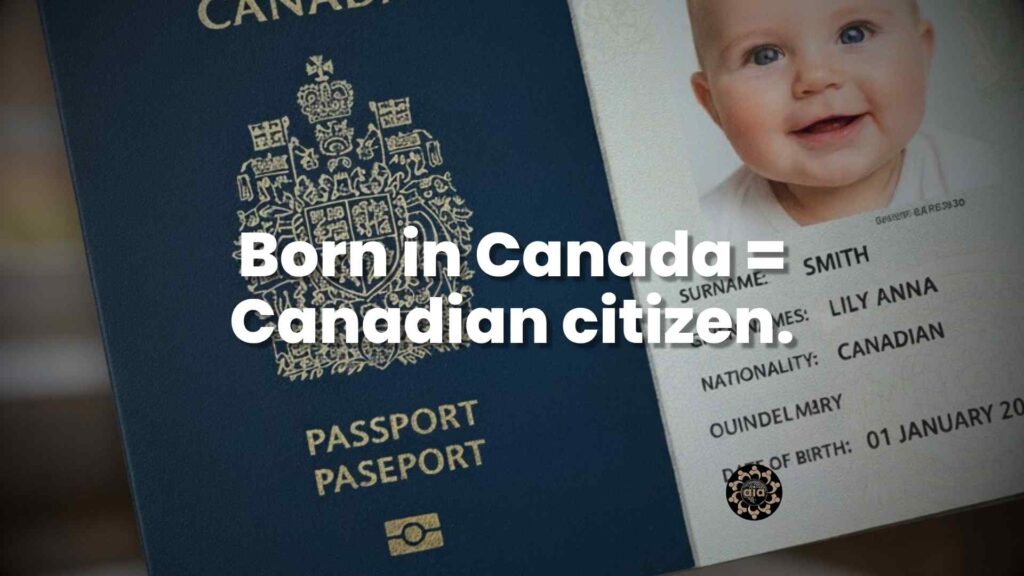
If your child is born in Canada today, they automatically become a Canadian citizen.
Simple. Fair. That’s the Canada most of us believe in, a country that welcomes people not by bloodline, but by belonging.
But in 2025, that idea came under fire.
A new proposal from the Conservative Party aimed to end birthright citizenship, also known as jus soli. and restrict it only to babies born to Canadian citizens or permanent residents.
Sounds technical, right? But make no mistake. This debate cuts to the core of who we are as a country.
Should Canada remain a place where every child born on our soil belongs here, or should we start drawing lines between babies based on their parents’ status?
Let’s break down what’s really happening and why this issue matters to every immigrant, student, and family dreaming of building a future here.
What’s Actually Being Proposed
Here’s the short version:
Under Canada’s Citizenship Act, anyone born in Canada (except children of foreign diplomats) automatically becomes a Canadian citizen, regardless of their parents’ immigration status.
That’s what’s called unconditional jus soli, the “right of the soil.”
It’s been a cornerstone of Canada’s inclusion model for decades.
But the Conservative proposal (introduced in October 2025) wants to change that.
It would make citizenship at birth conditional. granted only if at least one parent is a Canadian citizen or permanent resident.
Their main argument? To stop so-called “birth tourism” and to reduce strain on healthcare and housing caused by a growing temporary resident population.
Sounds like a neat solution. until you dig a little deeper.
Why This Debate Is About Much More Than Policy
Birthright citizenship isn’t just another immigration rule. It’s a statement about what kind of society we want to build.
For decades, Canada has told the world: If you’re born here, you belong here.
That simple truth has built generations of Canadians. children of international students, workers, refugees, and families who started from scratch and gave back to this country many times over.
Taking that away would change more than the law.
It would change the message we send to the next generation. That belonging depends not on where you’re born, but on whether your parents have the “right” paperwork.
And that’s a dangerous path.
Is “Birth Tourism” Really the Problem?
Let’s talk numbers, because this debate is full of fear, not facts.
According to the Canadian Institute for Health Information (CIHI), “non-resident, self-pay” births. The closest indicator of birth tourism. make up less than 1% of all live births in Canada.
That’s right. Less than one in a hundred.
Yet this tiny fraction has been used to justify rewriting a principle that has worked for decades,
a principle that binds us together as Canadians.
So what’s really behind this push?
Some see it as a reaction to public anxiety over housing, healthcare, and rapid immigration growth.
Yes, Canada’s temporary resident population has surged. over 2.8 million by 2024. But blaming babies born here doesn’t fix those problems.
Restricting citizenship won’t build new homes or fund more hospitals.
It will just divide families and weaken one of Canada’s most powerful tools of inclusion.
Who Would This Affect?
If you’re a temporary foreign worker, international student, or refugee claimant, this change would directly affect your child’s status.
Today, if your baby is born in Canada, they’re a citizen. full stop.
Under the proposed change?
They wouldn’t be.
Your child could grow up here, speak English or French, sing O Canada at school, and feel Canadian in every way. and still not have the legal right to call this country home.
This isn’t theory. It’s what has happened in countries that already restricted jus soli, like the UK, Australia, and Ireland.
Each saw the rise of a “second tier” of children. born locally but excluded from full citizenship, creating legal limbo and inequality from birth.
That’s not the Canadian story we want to write.
The Human Impact: Families in Limbo
Let’s picture this.
A graduate student from India gives birth in Toronto.
She’s been here for three years, studying, working part-time, and contributing to the economy.
Under current law, her baby is Canadian.
Under the proposed law, that same baby might not be.
Now imagine parents from countries that don’t automatically pass on citizenship by descent. such as Kuwait or parts of Southeast Asia.
If Canada removes jus soli, their child could end up stateless. no citizenship anywhere.
That’s not just unfair.
It’s a violation of international law, including the 1961 Convention on the Reduction of Statelessness, which Canada is bound by.
So the question becomes: Do we want to solve a minor administrative concern by creating stateless children born on Canadian soil?
Public Opinion: A Country Divided
Polls show that Canadians are split.
Around 48% support changing the law, while 42% oppose it.
Older Canadians are more likely to favor restrictions.
Younger Canadians. especially those who grew up alongside immigrant classmates. overwhelmingly defend birthright citizenship.
This generational divide says something powerful:
The younger generation still believes in Canada’s inclusive promise.
They understand that our strength comes from belonging, not exclusion.
Global Context: Canada’s Choice in a Changing World
Supporters of reform often point to the UK, Australia, and New Zealand, which have already ended unconditional birthright citizenship.
But context matters.
Those countries are tightening, while the Americas. including the U.S., Mexico, and Brazil. still protect jus soli as a foundation of equality.
Canada has always stood proudly in that camp:
A new-world nation built by immigrants, where opportunity is inherited not by ancestry but by effort and belonging.
If Canada changes course, it would join a shrinking group of nations that tie citizenship to parentage, not place of birth.
And that would mark a turning point, away from the very values that made Canada a global symbol of fairness.
The Economic Truth Few Are Talking About
Let’s clear up another misconception:
Granting citizenship at birth doesn’t cost Canada; it strengthens it.
Research shows that citizens (even those born to non-resident parents) contribute more over time, have higher earnings, better job outcomes, and stronger community ties.
A Canadian study found that delaying citizenship eligibility by just one year reduces immigrant wages by 11%.
Why? Because citizenship unlocks stability, belonging, and economic mobility.
If we deny that to children born here, we’re not saving money; we’re holding back potential.
The truth is, integration starts at birth.
When every child feels fully Canadian, they grow up investing back into this country, socially, economically, and emotionally.
That’s the real return on birthright citizenship.
The Legal Reality: Can This Law Even Change?
Here’s what most people don’t realize:
In Canada, birthright citizenship isn’t constitutional; it’s legislated through the Citizenship Act.
That means Parliament could change it with a simple majority vote.
But that doesn’t mean it would survive a Charter challenge.
Legal experts warn the proposal would likely face a fight under Section 15 of the Canadian Charter of Rights and Freedoms, which guarantees equality without discrimination.
Denying citizenship to one child but not another, based solely on their parents’ immigration status, could easily be found discriminatory.
So even if the law passed, it might not stand.
Beyond Politics: What This Says About Us
At its heart, this debate isn’t just about policy; it’s about principle.
Birthright citizenship represents the belief that every child born here deserves a fair start.
Canada is more than a collection of status categories; it’s a community built on shared values and opportunity.
If we take that away, we risk creating a society where belonging depends on paperwork, not participation.
Where two children born in the same hospital on the same day could have entirely different futures, not because of who they are, but because of who their parents are.
That’s not the Canada we promised the world.
And it’s not the Canada most of us want to leave behind.
Key Takeaways: What You Should Remember
Birthright citizenship is still the law in Canada. Nothing has changed yet,
The Conservative proposal was defeated in committee in October 2025. The issue will likely return. The Conservative Party could revive it in its next election platform. Children born in Canada are citizens, unless their parents are foreign diplomats. The “birth tourism” problem is tiny, less than 1% of all births. Ending jus soli could create stateless children, violating international law. The real issue is inclusion, not abuse. Citizenship helps children integrate and succeed, which benefits all Canadians. Canada’s global reputation is at stake. Restricting jus soli would signal a move away from openness and equality.
What Should You Do if You’re Expecting or Planning to Give Birth in Canada
If you’re already in Canada, as a student, worker, or refugee claimant, your child’s citizenship rights are currently secure.
But with the political debate heating up, now is the time to get professional advice about your family’s future status.
Every situation is unique.
Some parents may qualify for permanent residence or other pathways that ensure long-term stability, even if laws change later.
The best part?
You don’t have to navigate this uncertainty alone.
For Personalized Guidance
If you’re planning to build your future, or your family’s future, in Canada, talk to an expert who’s been helping newcomers for over 30 years.
👉 Book a consultation with Amir Ismail
With decades of experience guiding families through citizenship and immigration challenges, Amir can help you understand your options, protect your child’s rights, and plan ahead with confidence.
Because in Canada, belonging shouldn’t depend on status.
It should depend on heart, effort, and hope.
Final Thought: The Kind of Canada We Want
Every generation has a defining test, a moment that asks, who do we want to be?
For Canada in 2025, that test is simple:
Do we want to be a country that closes its doors to newborns, or one that continues to open its arms?
Defending birthright citizenship isn’t about politics.
It’s about preserving the soul of a country built on inclusion, equality, and hope.
Because the promise of Canada has always been this:
If you’re born here, you belong here.
And that’s a promise worth defending.
For expert guidance on citizenship, immigration, or permanent residence pathways, book your personalized consultation with Amir Ismail at www.amirismail.com/book-a-consultation.