

The Strategic Guide to European Golden Visas: What Still Works After the Closures
What You Need to Know Right Now
The European golden visa landscape has just undergone its biggest shakeup in a decade. And if you’re researching EU residency options right now, you’re probably feeling overwhelmed.
Here’s the truth: The era of easy European residency is over.
But opportunities still exist. You just need to know where to look and how to move quickly.
Key Takeaways:
- Spain’s golden visa officially ended April 3, 2025 – no new applications accepted, but existing permit holders keep their rights
- Portugal eliminated all real estate investments in late 2023 – now requires fund investments ($500K), cultural donations ($200K), or business creation
- Greece doubled its minimum investment to $800K in prime areas (Athens, Thessaloniki, popular islands) as of August 31, 2024
- Latvia emerged as the surprise budget option – just $50K business investment plus $10K state fee, with 51% application surge in 2025
- Malta offers direct permanent residency – no renewals needed – with 2025 reforms making it more family-friendly and affordable
- Hungary’s new program grants 10-year permits with zero physical presence requirements – the longest initial validity in Europe
- Political risk is real – EU pressure and domestic housing concerns mean more programs could close with little warning
What You’ll Find on This Page
Table of Contents
Why European Golden Visas Are Disappearing (And What It Means for You)
Let me be blunt: European governments are having second thoughts.
For over a decade, golden visa programs worked exactly as designed. Countries attracted foreign capital. Investors got EU residency. Everyone was happy.
Then the housing crisis hit.
In Lisbon, Madrid, Barcelona, and Athens, the same cities where most golden visa investors wanted to live, housing prices skyrocketed. Locals couldn’t afford rent. Politicians needed someone to blame.
Foreign investors made an easy target.
The Perfect Storm of 2024-2025
Three forces converged to create the current situation:
1. Domestic Political Pressure
Portugal’s government faced intense criticism. Housing affordability became a national crisis. The solution? End golden visa real estate investments entirely in late 2023.
Spain followed the same playbook. On April 3, 2025, they shut down their entire program. The official reason? Real estate inflation in Madrid, Barcelona, and Malaga.
2. EU-Level Scrutiny
The European Commission published reports expressing concerns about:
- Money laundering risks
- Tax evasion potential
- Security threats
- Lack of due diligence standards
In response, the EU strengthened its visa suspension mechanism – explicitly adding “investor citizenship schemes” as grounds for revoking a country’s Schengen visa-free access.
That’s a big deal. It means Brussels can now punish countries that run problematic golden visa programs.
3. The End of Passive Real Estate
Here’s what’s actually happening: Governments are shifting from passive investment to active contribution.
They don’t want property buyers anymore. They want:
- Venture capital flowing to startups
- Jobs created for local citizens
- Cultural heritage preserved
- Scientific research funded
The ideal applicant isn’t a wealthy individual parking money in real estate. It’s a sophisticated investor, active entrepreneur, or philanthropist who aligns with strategic economic goals.
What This Means for You
If you’re still researching, you’re running out of time.
The programs that remain open today could change – or close – with minimal warning. Spain gave about 6 months’ notice. That’s not much time when you’re coordinating:
- Document gathering from multiple countries
- Source of funds verification
- Property searches or fund due diligence
- Legal representation in a foreign country
The smartest move? Decide fast. Move faster.
Understanding Residency vs. Citizenship: What You’re Actually Buying
Most people confuse these terms. Let me clear it up.
Residency = Permission to Live There
A residence permit gives you the legal right to live (and usually work) in a specific European country. You get a residence card. You can rent an apartment, open a bank account, and access healthcare.
But you’re still a citizen of your home country. You travel on your original passport. You can’t vote in most elections. And the permit is conditional; you must maintain your investment and meet renewal requirements.
The big benefit? With a European residence permit, you get visa-free travel throughout the Schengen Area. That’s 29 countries, no visa applications needed.
Citizenship = Full Membership in the Club
Citizenship is completely different. You get a second passport. You become a national of that EU country with ALL the rights that come with it:
- Live, work, study in ANY of the 27 EU member states
- Vote in elections
- Access social benefits
- Pass citizenship to your children
- Keep it for life (it can’t be revoked for not maintaining an investment)
For an EU citizenship, you also get the right to live in Switzerland, Iceland, Liechtenstein, and Norway.
The Strategic Reality
Residency is the path. Citizenship is the destination.
Most golden visa programs give you residency first. After maintaining that residency for 5-10 years (depending on the country), you can apply for citizenship through naturalization.
But here’s what nobody tells you: Getting citizenship requires actually living there.
You can maintain a Greek golden visa residency with zero days per year in Greece. But to get Greek citizenship, you need to spend 183 days per year there for 7 years, learn fluent Greek, and pass exams on Greek history and culture.
That’s a huge difference.
So ask yourself: Do you want a European residence card for mobility and options? Or do you want an EU passport?
The answer determines which program makes sense for you.
The Schengen Advantage: Why a European Residence Permit Is Worth It
Forget the real estate appreciation potential. Forget the tax benefits for a second.
The single biggest reason to pursue a European golden visa is Schengen access.
What Is the Schengen Area?
Twenty-nine European countries that eliminated all border controls between them. You show your residence permit once, then you can travel freely for up to 90 days within any 180 days.
Think about what that means:
Without Schengen access: Every time you want to visit a European country, you file a visa application. Submit documents. Pay fees. Wait for approval. Hope you don’t get rejected. Plan your entire trip around visa validity dates.
With Schengen access, you book a flight. You go. That’s it.
Who Benefits Most?
This is transformative if you’re:
A business professional who needs to attend meetings in London, Paris, Frankfurt, and Milan in the same month
An entrepreneur building partnerships across European markets
A family that wants to explore Europe without bureaucratic nightmares
Anyone with a passport who currently makes European travel difficult
The best part? You get this benefit immediately when your residence permit is approved. You don’t have to wait 5-10 years for citizenship.
The 6 European Golden Visa Programs Open in 2025 (and possibly in 2026)
Let’s get into the specifics. Here are your real options right now.
1. Portugal: The Innovator’s Gateway (But No More Real Estate)

Status: Open but fundamentally reformed
Minimum Investment: $200,000 – $500,000, depending on route
What Changed: Portugal killed ALL property-related investments in late 2023. No exceptions.
Your Options Now:
Investment Funds ($500,000): The main route. Must invest in a Portuguese venture capital or investment fund. The fund CANNOT invest in real estate. At least 60% must go to Portuguese companies.
The good news? Specialized funds exist with:
- Fixed 5-year terms matching the golden visa timeline
- Guaranteed buyback provisions
- Projected annual returns
Cultural Heritage Donation ($250,000): Support artistic production or restore cultural heritage sites. Reduced to $200,000 in low-density areas.
Scientific Research ($500,000): Fund research at Portuguese institutions.
Business Creation: Either create 10 jobs (8 in low-density areas) with no minimum capital, OR invest $500,000 in a company and create 5 jobs.
Path to Citizenship: 5 years of legal residency
Physical Presence Required: Just 7 days per year average (14 days per two-year renewal period)
The Hidden Advantage: A 2024 law change means your 5-year countdown to citizenship starts when you SUBMIT your application, not when it’s approved. That saves you 12-18 months.
The Tax Situation: The famous NHR (Non-Habitual Resident) regime ended for new applicants in 2023. It’s replaced by IFICI (“NHR 2.0”) – a 10-year regime with a flat 20% tax on Portuguese income and 0% on most foreign income. But you must qualify based on your professional activity (scientists, tech workers, researchers, certain executives).
Processing Time: 12-24 months (backlog exists but is improving)
Who It’s For: Sophisticated investors comfortable with fund investments, entrepreneurs who want to build a business in Europe, or those with a specific love for Portuguese culture and lifestyle.
2: Greece: The Tiered Real Estate Route (Now Much More Expensive)
Status: Open but with massive price increases
Minimum Investment: $250,000 – $800,000, depending on location

What Changed: On August 31, 2024, Greece introduced a complex four-tier system:
Tier 1 – Prime Zones ($800,000): Athens, Thessaloniki, Mykonos, Santorini, any island with 3,100+ residents. Must be a single property with 120 sqm minimum.
Tier 2 – Regional Areas ($400,000): Everywhere else in Greece. Same 120 sqm minimum.
Tier 3 – Commercial Conversion ($250,000): Buy a commercial property and convert it to residential use. Available nationwide.
Tier 4 – Heritage Restoration ($250,000): Purchase and fully restore a listed heritage building.
New Restriction: You CANNOT use your golden visa property for short-term rentals (Airbnb, etc.). It’s for personal residence or long-term rental only.
Alternative Non-Real Estate Routes:
- $500,000 bank deposit (5-year term)
- $400,000 in Greek government bonds or company shares
- $350,000 in a Greek investment fund
Path to Citizenship: 7 years of legal residency
Physical Presence Required: NONE to maintain residency. But to get citizenship, you need 183 days/year for 7 years, plus fluency in Greek and passing history/culture exams.
The Tax Advantage: Greece offers two special regimes:
- Non-Dom for HNWIs: Pay a flat $100,000/year, and that covers ALL foreign-sourced income (no matter how much). Must invest $500,000 in Greek assets. Valid for 15 years.
- Foreign Pensioners Regime: Just 7% tax on foreign pension income for 15 years. Must spend 6+ months/year in Greece.
Processing Time: 6-9 months
Who It’s For: Property investors who love the Mediterranean lifestyle, retirees seeking sun and favorable taxation, or anyone comfortable with zero-presence residency but no realistic citizenship path.
3. Malta: The Permanent Residency Hub (Newly Reformed)
Status: Open with major 2025 improvements
Minimum Investment: Approximately $150,000 total (if renting)
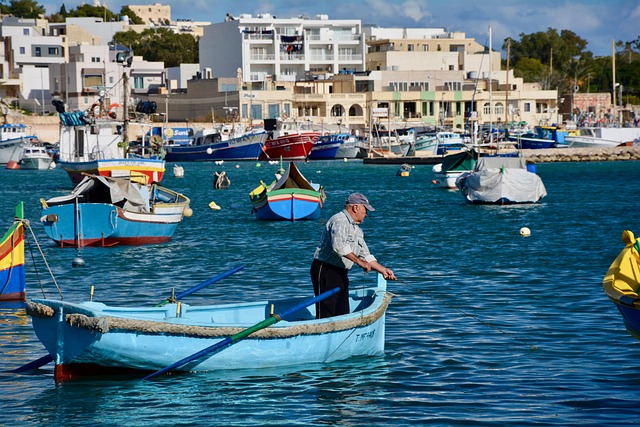
Why Malta Stands Out: You get permanent residency immediately. No renewals. No maintaining investments after 5 years. It’s a true permanent residence card.
The 2025 Reforms Made It Better:
Property Requirement:
- Purchase: $375,000 minimum (up from $300K)
- Rental: $14,000/year minimum (up from $10K)
- Must be maintained for 5 years
Government Contribution: Now just $37,000 for everyone (previously $60,000 for renters). That’s a $23,000 savings if you rent.
Administration Fee: $60,000 to the Residency Malta Agency. BUT you can pay just $15,000 upfront and get a 1-year temporary card immediately. This lets you relocate while your full application processes.
Family Fees: FREE for spouse and children under 18. Just $7,500 per adult dependent (down 25%).
New Flexibility: Property owners can rent out their qualifying property when not using it. Renters can sublet (with permission) after 5 years.
Financial Requirement: Show $500,000 in capital assets ($150,000 must be liquid financial assets).
Path to Citizenship: By naturalization only (requires substantial physical presence)
Physical Presence Required: None to get the card. You just need to visit once to issue it.
The Tax Advantage: Malta’s Global Residence Programme (GRP) taxes foreign-sourced income remitted to Malta at a 15% flat rate (minimum $15,000/year tax). Income NOT remitted isn’t taxed. Foreign capital gains aren’t taxed even if remitted.
Plus Malta’s corporate tax system: Headline rate is 35%, but shareholders can claim refunds, resulting in effective rates as low as 5%.
Processing Time: 4-6 months
Who It’s For: Families wanting permanent status fast, business owners attracted to Malta’s fintech/iGaming hub, HNWIs seeking tax efficiency with a pro-business English-speaking environment.
4. Hungary: The 10-Year Renewable Permit (Brand New Program)
Status: Newly launched in 2024-2025
Minimum Investment: $250,000 – $1,000,000

Why It’s Unique: Hungary learned from everyone else’s mistakes. They deliberately excluded direct real estate purchases to avoid the housing affordability backlash that killed other programs.
Your Investment Options:
Real Estate Fund ($250,000): Invest in a Hungarian real estate fund registered with the National Bank. The fund must allocate 40%+ of assets to Hungarian residential real estate. You hold the investment for 5 years.
This gives you exposure to the property market without directly competing with local buyers.
Philanthropic Donation ($1,000,000): Non-refundable donation to a public interest trust supporting Hungarian higher education (research, science, arts).
The Standout Feature: You get a 10-year residence permit upfront. Not 1 year. Not 2 years. TEN YEARS.
Then it’s renewable for another 10 years.
Physical Presence Required: Absolutely none. Zero days per year to obtain OR renew.
Path to Citizenship: 8 years (requires actual physical residency)
The Tax Advantage: Hungary has the lowest corporate tax in the EU at 9%. Attractive for business operations.
Processing Time: 4-6 months
Family Inclusion: Spouse and minor children included
Who It’s For: Investors who want ultra-long-term security with zero presence requirements, business owners attracted to Central Europe’s logistics hub and low tax rates, or families seeking a solid “Plan B” without immediate relocation.
Cyprus: The Direct Permanent Residency Path
Status: Open and efficient
Minimum Investment: $300,000 + VAT

The Speed Factor: Cyprus processes applications in just 2-3 months. That’s the fastest in Europe.
Your Investment Options:
Residential Real Estate ($300K + VAT): Up to two NEW properties from a developer.
Commercial Real Estate ($300K): Offices, shops, hotels (can be used or new).
Company Shares ($300K): Invest in a Cypriot company that employs 5+ people.
Investment Funds ($300K): Cyprus Investment Funds Association (CIFA) collective investments (AIF, AIFLNP, or RAIFs).
Additional Requirement: Prove a stable annual income of $50,000+ from outside Cyprus. Add $15,000 for a spouse, $10,000 per child.
Path to Citizenship: 7 years of legal residency
Physical Presence Required: Visit once every 2 years to maintain residency. But for citizenship, you need 7 years of legal residence, including 12 continuous months before applying.
The Citizenship Requirements Are Serious:
- Clean criminal record
- Financial stability
- Greek language proficiency (B1 level)
- Pass exams on Cypriot political and social realities
Expedited Path: Highly skilled professionals can get citizenship in 3-4 years with lower language requirements.
The Tax Advantage:
- 12.5% corporate tax (very competitive)
- No inheritance tax
- IP Box regime can reduce the effective tax on IP income to 2.5%
- Startup Visa scheme for non-EU entrepreneurs
Processing Time: 2-3 months
Who It’s For: Investors wanting the absolute fastest route to permanent residency, business owners attracted to the IP-friendly tax regime, or those with existing business interests in the Eastern Mediterranean/Middle East region.
6. Latvia: The Budget-Friendly Surprise (Surging in Popularity)
Status: Open and experiencing a 51% application surge in 2025
Minimum Investment: $50,000 + $10,000 state fee = $60,000 total
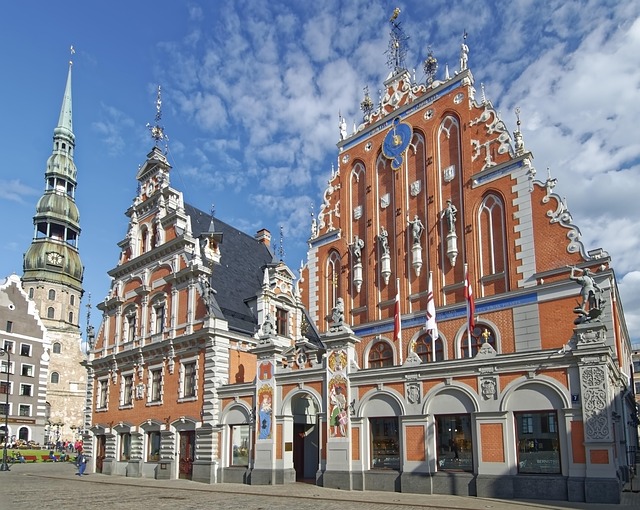
Why Latvia Is Suddenly Hot: As Portugal and Greece became expensive, investors discovered Latvia’s incredibly affordable business investment route.
Your Investment Options:
Business Investment ($50,000): The popular route. Invest in a Latvian company’s share capital. The company must have under 50 employees and under $10M annual turnover. Add a one-time $10,000 state contribution.
For larger companies, the investment requirement rises to $100,000.
Real Estate ($250,000): Single property plus 5% state fee (so $262,500 total).
Bank Deposit ($280,000): Subordinated bonds of a Latvian bank for 5 years. Plus $25,000 state fee.
Path to Citizenship: 10 years (requires physical residency)
Physical Presence Required: None for maintaining residency. Annual in-person renewal required.
The Speed Advantage: Applications process in just 2-3 months. Combined with the low cost, this makes Latvia a compelling entry point.
The Business Environment: Latvia prioritizes ICT, smart materials, biomedicine, and smart energy sectors. Startup-friendly policies.
Processing Time: 2-3 months
Initial Permit Validity: 5 years
Who Applied in 2025: Growing interest from Vietnam, UK, and India nationals, in addition to traditional markets.
Who It’s For: Entrepreneurs who want the cheapest EU entry point, investors comfortable with the $50K business investment model, or anyone prioritizing speed and affordability over a southern European lifestyle.
Complete European Golden Visa Comparison: Make Your Decision Faster
Let me make this simple. Here’s everything side by side:
The Real-World Cost Breakdown
Minimum investment is just the starting point. Here’s what you’ll actually spend:
Portugal (Fund Route):
- Fund investment: $500,000
- Legal fees: $15,000-25,000
- Due diligence: $5,000
- Government fees: $5,000-8,000
- TOTAL: ~$520,000-540,000
Greece (Tier 1 Property):
- Property: $800,000
- Transfer tax (3%): $24,000
- Legal fees: $10,000-15,000
- Property tax: Annual (varies)
- TOTAL: ~$835,000-850,000
Malta (Rental Route):
- Rental (annual): $14,000 x 5 years = $70,000
- Government contribution: $37,000
- Administration fee: $60,000
- Legal fees: $15,000-20,000
- Due diligence: $10,000
- TOTAL: ~$192,000-200,000 (plus must show $500K in assets)
Latvia (Business Route):
- Business investment: $50,000
- State fee: $10,000
- Legal fees: $8,000-12,000
- Due diligence: $3,000-5,000
- TOTAL: ~$71,000-77,000
How to Choose the Right European Residence Program for Your Situation
How to Choose the Right Program
Stop trying to find the “best” program. There isn’t one.
The right program depends on YOUR priorities.
Question 1: What’s your primary goal?
→ Any program works. Choose based on cost and speed.
→ Recommended: Latvia (cheapest, fast) or Cyprus (fastest)
→ Recommended: Portugal (5 years, minimal presence)
→ You must be willing to actually live there eventually.
→ Recommended: Greece (zero presence, no realistic citizenship path)
→ Recommended: Hungary (10-year permit, zero presence)
→ Recommended: Malta (permanent status, no renewals)
→ Recommended: Malta (fintech/iGaming hub, tax efficiency)
→ Recommended: Hungary (9% corporate tax, Central Europe logistics)
→ Recommended: Cyprus (IP-friendly, 12.5% corporate tax)
Question 2: How much time will you *actually* spend there?
→ Recommended: Greece, Hungary, or Malta
→ Be honest: Don’t fool yourself about “eventually living there”.
→ Recommended: Portugal (only need 7 days/year)
→ This is a realistic path to citizenship if you’re willing to increase presence later.
→ Any program works.
→ Strongly consider tax implications of becoming a tax resident.
Question 3: What’s your budget reality?
→ Latvia is your only option.
→ Malta (rental route)
→ Greece (heritage restoration or commercial conversion)
→ Cyprus (property or shares)
→ Greece (regional property)
→ Portugal (fund investment)
→ Greece (prime property in Athens/islands)
→ Consider multiple programs for diversification.
Question 4: How fast do you need this?
→ Cyprus (2-3 months)
→ Latvia (2-3 months)
→ Malta (4-6 months)
→ Hungary (4-6 months)
→ Greece (6-9 months)
→ Portugal (but processing is improving)
Question 5: Do you want real estate or not?
→ Greece (if you have $400K-$800K)
→ Cyprus (if you have $300K)
→ Malta (purchase option, $375K)
→ Portugal (funds with guaranteed buyback)
→ Hungary (fund investment)
→ Latvia (business investment – different type of risk)
Framework Complete
You now have a clearer picture based on your priorities. Review your answers above to see the recommendations for each step.
The Hidden Costs Nobody Tells You About
Let’s talk about what the glossy brochures don’t mention.
The Time Cost
Document gathering is brutal. You need:
- Criminal records from every country you’ve lived in for 6+ months (some require 12 months) over the past decade
- Apostilled and translated versions
- Source of funds documentation going back years
- Birth certificates, marriage certificates (apostilled)
- Proof of income/assets
- Health insurance
- Medical certificates
Reality check: This takes 2-4 months even with professional help. Some documents expire (criminal records are often only valid 3-6 months), so timing is critical.
The Renewal Cost
Most programs require renewal every 1-5 years until you get permanent residency.
Each renewal includes:
- Legal fees: $3,000-8,000
- Updated criminal records
- Updated proof of investment maintenance
- Updated health insurance
- Government renewal fees
Over 5 years before getting permanent residency or citizenship, you might spend an additional $15,000-40,000 in renewal costs.
The Tax Compliance Cost
If you become a tax resident (usually 183+ days/year), you need:
- Tax filing in the host country (annual)
- Potential tax filing in your home country (annual)
- Cross-border tax advisor ($5,000-15,000/year)
Even if you DON’T become a tax resident, you should get advice to ensure you’re structuring things correctly.
The Opportunity Cost
Your investment is locked up for 5 years in most programs.
If you invest $500,000 in a Portuguese fund at 2-4% returns, you’re giving up potentially higher returns elsewhere.
Example:
- $500K in a golden visa fund at 3%: Earn $15K/year = $75K over 5 years
- Same $500K in a diversified global portfolio at 7%: Earn $35K/year = $175K over 5 years
- Opportunity cost: $100,000
Now, is EU residency and a path to citizenship worth $100K to you? Maybe yes. Maybe not. But don’t ignore this cost.
The “You Still Need Help” Cost
Even after getting your residence permit, you’ll need:
- Local accountant: $2,000-5,000/year
- Immigration lawyer for renewals: $3,000-8,000 every 2-5 years
- Translation services: $500-2,000 ongoing
- Property management (if you bought real estate): 8-12% of rental income
Add it all up over 5 years: You’re looking at $50,000-100,000 in “hidden” costs beyond the minimum investment.
What Just Happened in Spain (And Could It Happen Again?)
Let’s talk about the elephant in the room.
Spain’s golden visa was one of the most popular programs in Europe. Over 10,000 residence permits issued. A simple $500,000 real estate investment. Done.
Then on April 3, 2025, it ended. Completely.
Why Spain Pulled the Plug
The official reason: Housing affordability crisis in Madrid, Barcelona, and Malaga. Local residents couldn’t find affordable places to live while foreign investors snapped up properties.
The political calculation: Prime Minister Pedro Sánchez needed to respond to voter anger about housing costs. Ending the golden visa was an easy win.
The EU pressure: Brussels had been criticizing these programs for years. Spain aligned with EU recommendations.
The Warning Signs (In Hindsight)
Looking back, there were signals:
1: Increasing media criticism – Spanish newspapers ran stories about golden visa investors driving up prices
2. Political rhetoric – Politicians started using golden visas as scapegoats in housing debates
3. EU reports – Brussels published multiple papers questioning the security and economic value of these programs
4. Neighboring countries tightening rules – Portugal’s 2023 changes should have been a warning
What About Existing Golden Visa Holders?
Here’s the good news: if you already have a Spanish golden visa:
Your rights are protected. The Spanish government confirmed that all existing permit holders can:
- Keep their residence permits
- Renew them as usual
- Continue to enjoy all the benefits
Applications in process before April 3, 2025, are being processed under the old rules.
But no new applications are accepted. The door is closed.
Could This Happen to Other Programs?
Yes. Absolutely.
Let me be very direct: Every golden visa program carries political risk.
The same factors that killed Spain’s program exist elsewhere:
Portugal: Already eliminated real estate. Could tighten further or add minimum stay requirements. There’s active political discussion about increasing the citizenship requirement from 5 to 10 years.
Greece: Made massive changes in 2024. More restrictions could come if housing pressure continues in Athens.
Malta: Relatively stable, but small countries are more vulnerable to EU pressure. Malta already faced EU scrutiny over its citizenship program.
Hungary: New program, so political consensus seems strong for now. But Hungary’s relationship with the EU is complicated.
Cyprus: Shut down its citizenship program in 2020 under EU pressure. The residency program has survived, but could face scrutiny.
Latvia: Lowest profile program. Less media attention = less political pressure. But that could change.
The EU’s Real Agenda
Brussels wants to harmonize or eliminate these programs entirely. They see them as:
- Security risks (insufficient due diligence)
- Back doors to EU access (circumventing immigration policy)
- Corruption vectors (potential for money laundering)
The EU strengthened its visa suspension mechanism in 2025, explicitly adding “investor citizenship schemes” as grounds for punishment.
Translation: The EU can now threaten to revoke a country’s visa-free Schengen access if its golden visa program is problematic.
That’s a nuclear option. No country wants to lose Schengen access. It would devastate tourism and business.
Your Risk Mitigation Strategy
1. Move Fast
If you’ve decided on a program, don’t wait. Application windows could close with 3-6 months’ notice.
2. Choose Stable Countries
Smaller countries with less housing pressure = lower political risk. Malta, Cyprus, and Latvia are less likely to face the same backlash as Spain or Portugal.
3. Consider Diversification
If you have the resources, pursue residency in TWO countries. If one program closes, you have a backup.
4. Don’t Count on Citizenship
The 5-10 year path to citizenship is a bonus, not a guarantee. Rules could change. View the residence permit as the primary benefit.
5. Get Permanent Status When Possible
Malta and Cyprus offer immediate permanent residency. That’s more secure than renewable temporary permits.
6. Stay Informed
Monitor news in your chosen country. Political shifts happen fast. Having advance warning could give you time to adjust your strategy.
The truth is, the golden age of golden visas is over. What remains are opportunities in a shrinking window.
Act accordingly.
Frequently Asked Questions
Can I still apply for Spain’s golden visa?
No. Spain’s golden visa program officially ended on April 3, 2025. No new applications are being accepted. If you had an application in process before that date, it will be processed under the old rules. Existing permit holders can renew as usual.
What happened to Portugal’s real estate option?
It’s completely gone. Portugal eliminated ALL real estate investments as qualifying routes in late 2023. You cannot buy property for a golden visa anymore. Your options now are fund investments ($500K), cultural donations ($200K), scientific research ($500K), or business/job creation.
Which European golden visa is the cheapest?
Latvia at $60,000 total ($50K business investment + $10K state fee). Malta’s rental route comes in second at roughly $150,000 for the core costs (though you must prove $500K in assets).
Which European residency program gives me permanent residency immediately?
Malta and Cyprus both offer permanent residence permits from day one. No renewals needed as long as you maintain the investment. Hungary gives a 10-year initial permit, which is the longest temporary permit available.
Can I get EU citizenship through a golden visa?
Yes, but it takes 5-10 years and requires actually living in the country for a significant period, learning the language, and passing citizenship exams. The residency permit gives you the RIGHT to eventually apply for citizenship, not a guarantee.
Portugal has the best citizenship path: 5 years, A2-level Portuguese language requirement, and minimal physical presence (7 days/year) to maintain residency.
Do I need to live in the country to maintain my residency?
It depends on the program:
Greece, Hungary, Malta: ZERO days required
Portugal: 7 days per year average (14 days per 2-year period)
Cyprus: Visit once every 2 years
Latvia: No minimum, but annual in-person renewal required
But remember: maintaining RESIDENCY is different from qualifying for CITIZENSHIP. Citizenship requires substantial physical presence in every country.
Can I include my family?
Yes, all programs include family members, but the definition varies:
Spouse and minor children: Included in all programs
Adult children: Portugal, Malta, and Cyprus include children up to age 21-29 (varies by program)
Parents: Portugal, Greece, and Malta allow dependent parents or grandparents
Each additional family member may have added fees (typically $5,000-$10,000 per person).
What if my source of funds is from my business?
That’s completely fine – most golden visa applicants are business owners. You’ll need to provide:
– Corporate registration documents
– Audited financial statements (typically 3-5 years)
– Dividend distribution records
– Corporate and personal tax returns
– Bank statements showing fund transfers
– Explanation of how the business generated the wealth
– The key is creating a clear, documented trail from business profits to the investment amount.
Can I work in the country with a golden visa?
Usually yes, but it varies:
– Portugal, Greece, Cyprus: Yes, you can work
– Malta: The MPRP does not grant automatic work rights; you may need a separate work permit for certain activities
– Hungary: Yes, you can work
– Latvia: Yes, you can work
Even if you CAN work, most golden visa holders don’t. They’re entrepreneurs running businesses elsewhere or investors with passive income.
What about healthcare?
You must have health insurance – it’s mandatory for all programs.
For initial applications, travel medical insurance with €30,000 minimum coverage for emergencies and repatriation is often sufficient.
For the residence permit itself, you need comprehensive private health insurance valid in the host country (and ideally across Schengen). This typically costs $1,500-$5,000 per person per year.
If you become a legal resident and contribute to the social security system, you may eventually access the public healthcare system.
Can I rent out my golden visa property?
It depends:
– Greece: NO. New 2024 rules prohibit short-term rentals (Airbnb). Long-term rental is allowed.
– Malta: YES. 2025 reforms allow owners to rent out their qualifying property when not using it.
– Cyprus: YES, you can rent it out.
– Latvia: If you purchased property (not the common route), rental is typically allowed.
Check specific program rules; they change frequently.
What happens if the program closes while I’m applying?
Applications in process are usually protected. When Spain closed, they confirmed applications submitted before April 3, 2025, would be processed. Portugal did the same when it eliminated real estate.
But “in process” means officially submitted and accepted, not just “thinking about it” or “gathering documents.”
This is why speed matters.
Do I need to pay taxes in the country?
Only if you become a tax resident, which usually requires spending 183+ days per year there.
If you maintain your golden visa with minimal presence (7 days/year in Portugal, zero in Greece), you typically DON’T become a tax resident.
However, some countries offer special tax regimes for golden visa holders:
– Portugal: IFICI (20% flat on Portuguese income, 0% on most foreign income)
– Greece: Non-Dom flat tax (€100K/year covers all foreign income)
– Malta: GRP (15% on foreign income remitted to Malta)
Get professional tax advice. This is NOT an area to DIY.
Can I apply for multiple golden visas at once?
Yes, legally you can. Some wealthy families pursue residency in 2-3 countries simultaneously as a diversification strategy.
– Practical considerations:
– You’ll need separate investment amounts for each country
– Document gathering and legal costs multiply
– Managing multiple residencies (renewals, compliance) is complex
– You can only be a tax resident in ONE country at a time
Most people don’t do this. But if program stability is a major concern and you have the resources, it’s an option.
What due diligence do they conduct on applicants?
Very thorough. Expect:
– Criminal record checks in every country you’ve lived in 6-12+ months over the past decade
– Interpol and Schengen Information System database checks
– Source of funds verification (extensive documentation required)
– Anti-money laundering (AML) screening
– Financial background checks
– Sometimes interviews
– Countries like Malta have four-tier due diligence processes. They will discover undisclosed issues.
Key rule: Be completely transparent. Trying to hide something is worse than the thing itself.
How long does the citizenship application take after residency?
2-3 years after you’re eligible to apply.
So if you need 5 years of residency before applying for citizenship, the TOTAL timeline is 7-8 years from starting the golden visa process.
Citizenship applications involve:
– Extensive documentation
– Language testing
– History/culture exams
– Background checks
– Interviews
– Oath ceremonies
Plan for the long game.
Is now a good time to apply, or should I wait?
Now is the time. Don’t wait.
Here’s why:
1. Programs are closing or tightening – Spain closed, Portugal eliminated real estate, Greece doubled prices. The trend is clear.
2. EU pressure is increasing – Brussels is actively pushing member states to end these programs.
3. Processing times are long – Even fast programs take 2-3 months. Complex ones take 12-24 months. Waiting means risking a closure announcement mid-process.
4. Investment amounts may increase – Greece went from €250K to €800K overnight in prime areas.
5. Political winds shift fast – Housing crises, election cycles, and EU politics are unpredictable.
If you’ve identified that a European golden visa serves your strategic needs, act now. The window is closing.
Your Next Steps: Don’t Navigate This Alone
Here’s the reality: Golden visa applications are complex, high-stakes, and expensive.
You’re making a six-figure investment. You’re dealing with foreign legal systems in languages you might not speak. You’re submitting documents that must be perfect, or you face rejection and wasted time.
This isn’t something to DIY.
Why Professional Guidance Matters
The right advisor helps you:
Choose strategically – Match your specific situation (goals, budget, timeline, family structure) to the optimal program
Avoid expensive mistakes – Incomplete applications, wrong investment structures, missing documents, and compliance failures cost time and money
Navigate bureaucracy – Every country has different processes, forms, and requirements. Professionals know the shortcuts and current processing realities.
Prepare bulletproof source of funds documentation – This is where most applications get delayed or rejected. Expert preparation prevents problems.
Access trusted local partners – Fund managers, banks, real estate professionals, and immigration lawyers in the host country
Stay compliant long-term – Renewals, tax planning, and eventual citizenship applications require ongoing guidance
The Cost of Getting It Wrong
A rejected application means:
- Lost application fees ($10,000-$25,000)
- Wasted legal fees ($15,000-$30,000)
- 6-12 months of lost time
- Potential impact on future applications
- Investment funds locked up or at risk
A poorly chosen program means:
- Paying for a citizenship path you’ll never actually pursue
- Tax complications you didn’t anticipate
- Renewals that are more burdensome than expected
- Misaligned investment returns
The cost of expert guidance ($15,000-$40,000, depending on program complexity) is insurance against much larger losses.
How Amir Ismail Can Help
Amir Ismail specializes in investment immigration strategy for high-net-worth individuals and families navigating complex cross-border situations.
With regulation by the College of Immigration and Citizenship Consultants (CICC) of Canada, Amir brings professional accountability and ethical standards to an industry that desperately needs both.
Strategic consultation includes:
- Comprehensive analysis of your specific situation and goals
- Program comparison tailored to your priorities
- Source of funds preparation strategy
- Introduction to trusted partners in host countries
- End-to-end application support
- Post-approval compliance guidance
- Long-term citizenship planning
This isn’t about filing paperwork. It’s about making a strategic decision that impacts your family for generations.
Get it right.
The Bottom Line
The European golden visa landscape changed forever in 2024-2025.
Spain closed its doors. Portugal eliminated real estate. Greece doubled prices. The EU is applying pressure. More changes are coming.
But opportunities still exist.
Portugal offers the best citizenship path for those willing to invest in funds or businesses.
Greece works for property investors who want zero-presence residency (but no realistic citizenship).
Malta provides immediate permanent status in a business-friendly, tax-efficient jurisdiction.
Hungary grants 10-year permits with no presence requirements – ideal for long-term security.
Cyprus delivers the fastest processing and immediate permanent residency.
Latvia is the budget option with surprising popularity growth.
The right program depends on your specific goals, budget, timeline, and lifestyle priorities.
What’s certain is this: The window is closing.
Programs that exist today may not exist next year. Investment amounts that seem high now may double overnight (like Greece). Processing times could extend as governments tighten compliance.
If you’ve determined that European residency serves your family’s long-term strategy, act now.
The best time to apply was two years ago. The second-best time is today.
Don’t let this opportunity slip away while you’re still researching.
Need personalized guidance on which European golden visa program fits your specific situation? Contact Amir Ismail at www.amirismail.com/book-a-consultation for strategic consultation on investment immigration planning.
Read More Residence By Investment Guides

The Strategic Guide to European Golden Visas: What Still Works After the Closures
The Strategic Guide to European Golden Visas: What Still Works After the Closures What You…

The UAE Golden Visa: Your Complete Guide to Long-Term Residency
The UAE Golden Visa: Your Complete Guide to Long-Term Residency Weighing a move to the…

Choosing a European Golden Visa? Why Residency, Not Citizenship, Is the Real Prize for Investors from Pakistan & the Middle East
Choosing a European Golden Visa? Why Residency, Not Citizenship, Is the Real Prize for Investors…

Citizenship vs. Residence: The Strategic Choice Every Investor Must Make
Citizenship vs. Residence: The Strategic Choice Every Investor Must Make You’ve seen the advertisements: a…

Portugal D7 & D8 Visa Refusal: Why It Happens & Alternatives
The Hard Truth About Portugal’s D7 & D8 Visas for South Asian & Middle Eastern…

Caribbean Citizenship By Investment Major Changes
Navigating the New Caribbean Citizenship By Investment Major Changes: Price Hikes, New Rules, and Choosing…