Canada allows urgent processing of citizenship certificates for people who face potential harm or hardship because of their sexual orientation, gender identity, or expression, or membership in a particular group. Standard applications now take about 33 months (IRCC, 3 September 2026) due to a surge in demand following changes to Canada’s Citizenship Act in December 2025. Qualifying applicants have received their certificates in as little as two weeks. This guide covers who qualifies, what to prepare, and how to submit a complete application for urgent processing.
Need the official document? See our citizenship certificate guide.
Not sure you qualify? Take our citizenship eligibility quiz or read the citizenship by descent guide.
Quick Navigation
What changed in Canada’s citizenship law in 2025
Bill C-3 received royal assent in December 2025, removing what was known as the generational cut-off. Before that change, citizenship by descent was generally limited to the first generation born outside Canada. A grandchild of a Canadian-born person did not automatically qualify unless the parent had already registered as a Canadian citizen.
The new law removed that limit. Anyone with a Canadian-born ancestor can now claim citizenship by descent, regardless of how many generations back that ancestor is. Millions of people became eligible who had no path before.
The result was a large increase in applications in early 2026. IRCC’s processing time for proof of citizenship certificates rose from 5 months in 2025 to 33 months as of 3 September 2026. Urgent processing requests are reviewed on a separate track from the standard queue, which is why submitting a strong request matters so much right now.
Who qualifies for a Canadian citizenship certificate by descent
The basic eligibility requirements
You need a Canadian-born ancestor somewhere in your family tree. Under Bill C-3, how far back that ancestor is does not matter. What does matter: you must never have renounced Canadian citizenship, and you need to be able to document the connection through official records.
If you were born outside Canada and have never lived there, IRCC will require you to establish that your ancestor was actually born in Canada or naturalized as a Canadian citizen. Birth records, provincial vital statistics documents, or naturalization certificates from that ancestor are the standard way to do this.
Who this applies to beyond American applicants
Most media attention has focused on American applicants, but the citizenship by descent pathway and urgent processing criteria apply to anyone in the world. If you live in a country where your sexual orientation, gender identity, or group membership creates a risk to your safety, and you can establish a Canadian ancestral connection, you may qualify for both the certificate and expedited processing.
For RCIC-guided help determining whether you qualify, you can review your options with AIA’s citizenship consultation service.
What urgent processing means and who can request it
Urgent processing is not a separate application program. It is a request made alongside a complete proof of citizenship application. IRCC lists the reasons below (help centre page updated 28 September 2026), and the reviewing officer decides each request.
\n\n\n\n- Harm or hardship: linked to race, religion, nationality, sexual orientation, gender identity or expression, or membership in a particular group
- Moving your minor child: your child is under 18, was born outside Canada, and has a Canadian parent
- Statelessness: a case of statelessness
- Death or serious illness in the family: you need to travel and cannot get a passport from your other nationality
- Renouncing foreign citizenship: you must give it up by a certain date
- Work or school: apply for a job, avoid losing a current job, or attend a school, college or university
- Social benefits: access to a pension, health care, or a social insurance number
Your request needs an explanation letter and supporting documents, such as a plane ticket or itinerary with proof of payment, an employer or school letter, a doctor’s note, or a death certificate. IRCC cannot guarantee your certificate will arrive in time, and it does not process incomplete applications.
You can read IRCC’s full criteria on the urgent processing page in the IRCC help centre.
The decision rests with the reviewing officer. IRCC does not guarantee a processing time. Applicants who meet the criteria have reported certificates arriving in two weeks. Applicants who submit weak or incomplete requests proceed at the standard 33-month pace.
Getting the request right from the start is the only way to give it a real chance.
How to apply: the complete step-by-step process
Step 1 – Choose and complete the correct form
Most applicants outside Canada submit their application on paper. Adults use form CIT0001. Minors have a separate form. Always download forms directly from canada.ca to ensure you have the current version. Third-party sites often host outdated versions.
Complete the form in full. Any blank required field will cause IRCC to return the application as incomplete, and an incomplete application cannot be reviewed for urgent processing.
Step 2 – Gather your ancestral documents
You need to establish the chain of connection between you and your Canadian ancestor. Depending on how many generations back that ancestor is, this can involve gathering several documents.
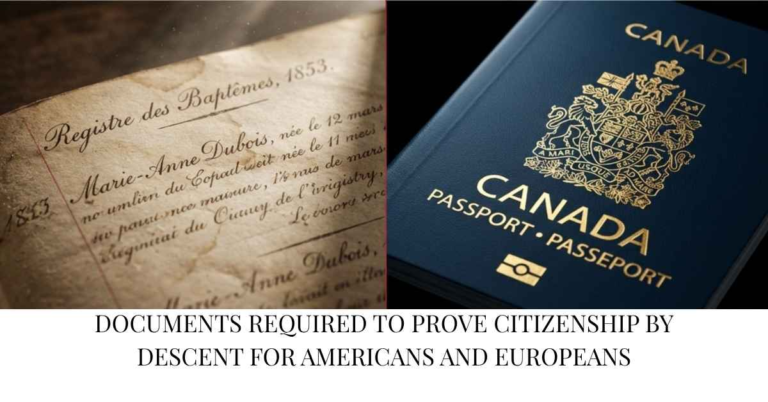
Typical documents include birth certificates for yourself and any intervening generations, marriage certificates where surnames changed, and a birth certificate, baptismal record, or naturalization certificate for the Canadian ancestor. Vital statistics offices, provincial archives, and church record repositories are the most common sources for older documents.
Every document not in English or French needs a translation plus an affidavit from the translator, unless a Canadian certified translator did the work. A fluent translator who is not certified can be used if they swear an affidavit about their language skills and the accuracy of the translation. You and your family members cannot translate your own documents.
Step 3 – Write your urgent processing explanation letter
This letter is where most applications succeed or fall short. Write it clearly and specifically.
State who you are and your relationship to your Canadian ancestor. Then explain your situation directly. Describe why delay creates real risk or hardship for you. Reference the specific IRCC criteria that apply to your case.
Vague language works against you. A letter that says “I believe I face hardship” is weaker than one that describes specific circumstances with reference to specific facts. The letter should be signed and dated.
Step 4 – Collect supporting documents for your hardship claim
Supporting documents give the reviewing officer evidence to back the claims in your explanation letter. What you include depends on your situation.
Useful documents include country condition reports from recognized human rights organizations, news reporting relevant to your circumstances, and letters from medical or mental health professionals if healthcare access is part of your claim.
Letters from legal representatives or community organizations that can speak to your situation also carry weight. Do not pad the package with documents that do not directly relate to your claim. A focused, well-organized submission is more effective than a large, scattered one.
Step 5 – Submit your complete application
All parts must be submitted together: the completed form, ancestral documents, explanation letter, and supporting documents. A partial submission cannot be reviewed for urgent processing.
Confirm the current mailing address on canada.ca before sending. Addresses change and using an outdated one causes delays. Keep photocopies of every document you submit and note the date you mailed the package.
IRCC will send an acknowledgement letter once your application is received. That letter contains the application number you need to check your status online.
What to expect after you apply
IRCC acknowledges applications within a few weeks of receipt. The urgent processing request is reviewed during that initial intake. If the reviewing officer determines urgent processing is warranted, your file moves ahead of the standard queue. If not, your application continues at the standard pace.
IRCC does not send a separate notification to confirm whether urgent processing was approved. You will receive communication when a decision on the certificate itself is reached.
Until you have your acknowledgement letter and application number, you cannot track the file online. Once you have that number, IRCC’s online tracker shows general status updates.
Do not call IRCC to check status unless more time than the published standard processing time has passed. The call centre cannot provide information beyond what the online tracker shows.
After the certificate: applying for a Canadian passport
A proof of Canadian citizenship certificate is the document you need to apply for a Canadian passport. Passport applications submitted without it will not be processed.
Canadian passport applications can be submitted online or on paper. Adults apply under their own application. Children under 16 require a parental application.
Gender on a Canadian passport can be selected at the applicant’s discretion from three options: F (female), M (male), or X (another gender). If the gender you select differs from what appears on your citizenship certificate or a previous Canadian passport, you must also submit a gender identifier request form with the passport application.
Passport processing times are separate from citizenship certificate processing. Apply for the passport only after the certificate arrives.
Not sure you qualify?
Take our Canadian citizenship eligibility quiz in about two minutes, read the Canadian citizenship guide, then Book a Strategy Consultation with Amir Ismail, RCIC R412319, to confirm your path.
Frequently asked questions
Can I apply for a Canadian citizenship certificate if my grandparent was born in Canada?
Yes. Bill C-3, which took effect in December 2025, removed the generational limit on citizenship by descent. Grandchildren, great-grandchildren, and further descendants of Canadian-born ancestors may now qualify, subject to meeting other eligibility conditions and being able to document the ancestral connection.
How long does urgent processing take for a Canadian citizenship certificate?
IRCC does not guarantee a processing time for urgent requests. Applicants who qualify have reported receiving certificates in as little as two weeks. If IRCC determines an application does not meet the urgent processing criteria, it proceeds at the standard rate, which as of 3 September 2026 is 33 months.
What documents do I need for urgent processing of a Canadian citizenship certificate?
You need a complete proof of citizenship application including the correct form, ancestral documents establishing your Canadian lineage, and any required certified translations. You also need a signed explanation letter describing the hardship or harm you face, along with supporting documents that corroborate your claim. Country condition reports, professional letters, and documentation of personal circumstances are common supporting materials.
Can I apply for Canadian citizenship by descent from outside Canada or the United States?
Yes. There is no requirement to live in Canada or the US to apply. The proof of citizenship application and urgent processing request can be submitted from anywhere in the world. Most international applicants file on paper using form CIT0001, mailed directly to IRCC.
Work with a regulated Canadian immigration consultant
Citizenship by descent applications involve multi-generational document chains and, in urgent processing cases, a request that must be written well to succeed. An incomplete application or a poorly written explanation letter is the most common reason these files stall.
As a Regulated Canadian Immigration Consultant (RCIC #R412319), I review citizenship by descent files regularly and can help you build a complete, accurate application from the start.
Book a Strategy Consultation to get started.
Explore More Canadian Citizenship By Descent Resources

Section 8 Lost Canadians: Bill C-3 Gives Back Citizenship Lost at Age 28
Section 8 Lost Canadians: Bill C-3 Gives Back Citizenship Lost at Age 28 If you…

Bill C-3 Reversal Risk: Could You Lose Citizenship by Descent?
Bill C-3 Reversal Risk: Could You Lose Citizenship by Descent? By Amir Ismail, RCIC #R412319…
Proof of Canadian Citizenship Processing Time 2026 (33‑Month Wait and 136,000‑File Queue Explained)
Proof of Canadian Citizenship Processing Time 2026 (33-Month Wait and 136,000-File Queue Explained) By Amir…
Canadian Citizenship by Descent: Eligibility Checklist for Americans (Bill C‑3)
Do I Qualify for Canadian Citizenship by Descent? The American’s Eligibility Checklist By Amir Ismail,…
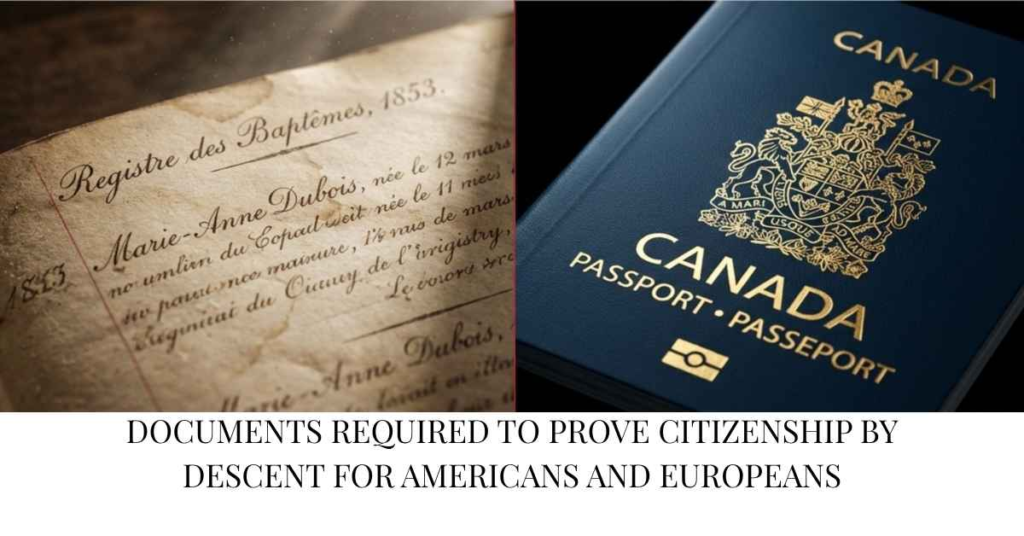
Canadian Citizenship by Descent: Complete Document Guide (Bill C-3 2025)
Baptismal Records for Canadian Citizenship by Descent: 2026 Guide
Baptismal Records for Canadian Citizenship by Descent: A Complete Ordering Guide (2026) LAST UPDATED: AUGUST…