

Canada to Australia Immigration Guide
Last Updated: November 14, 2025
You’re tired of scraping ice off your windshield in April.
You’re ready for a career move that actually pays off.
And you’re wondering if there’s a place where your Canadian credentials open doors instead of hitting walls.
Here’s the truth: Australia isn’t just warm weather and beaches.
It’s a strategic career upgrade for skilled Canadians.
Over 54,000 Canadians have already made the move. They’re working in high-demand fields. Earning competitive salaries. Living a lifestyle that lets them actually use their four weeks of mandatory vacation.
This isn’t a leap of faith. It’s a calculated decision backed by data.
Let me show you exactly why Australia is actively recruiting Canadian professionals right now—and how to position yourself for permanent residency.
Key Takeaways
- Australia’s unemployment rate for migrants is 3.9%—lower than Australian-born residents at 4.0%. This proves the system works.
- 71% of Australia’s 2025-26 migration program (132,200 spots) is dedicated to skilled workers in high-demand fields.
- Your Canadian skills are in structural demand: Tech, healthcare, engineering, and skilled trades face long-term shortages.
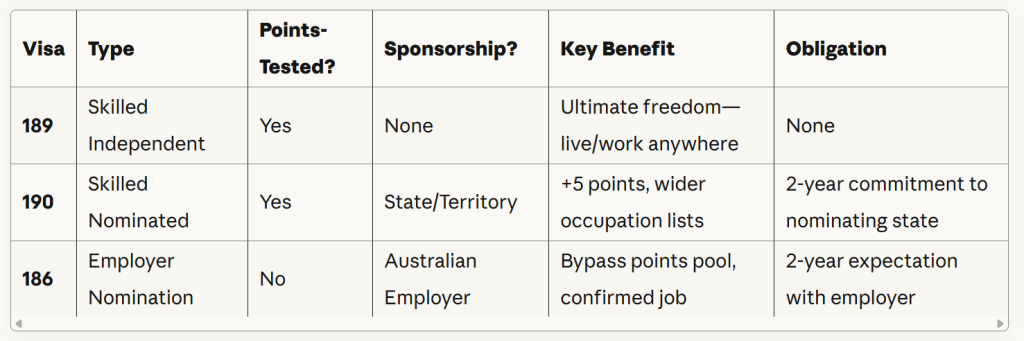
- Three permanent visa pathways exist: Skilled Independent (189), State Nominated (190), and Employer Sponsored (186)—each with different advantages.
- The hidden trap: Skills assessment for your visa does NOT equal professional licensing to work. Budget 6-12 months and several thousand dollars for re-licensing.
- Work-life balance is legislated: 20 days annual leave minimum, plus long service leave after 10 years—double what most Canadians get.
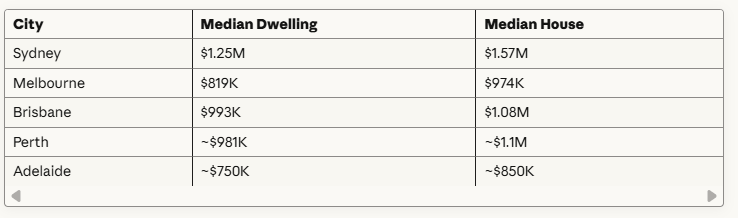
- Housing is expensive: Median house prices range from $974K (Melbourne) to $1.57M (Sydney). Rent first for 6-12 months.
What You’ll Find on This Page
Table of Contents
1. Why Australia Is Actively Recruiting Canadian Talent
Let’s start with what matters.
Australia needs you.
Not in a “we’re being nice” way. In a “our economy has structural skill shortages and you have exactly what we need” way.
The Climate Factor (It’s More Than Just Sunshine)
Yes, you’ll escape -40°C winters.
But here’s what most people miss: Australia’s year-round outdoor lifestyle isn’t just pleasant. It’s a productivity asset.
When you can exercise outdoors in January. When your kids can play sports every weekend. When “winter” means 15°C and sunny, your quality of life compounds.
Canadians report this as the #1 lifestyle benefit. It’s not superficial. It’s foundational.
Healthcare: Different System, Different Trade-Offs
Both countries offer universal healthcare. But the models differ in ways you need to understand.
Canada’s Model:
- Single-tier public system
- Free at the point of care
- Wait times for specialists and elective surgery can be long
Australia’s Model:
- Two-tier hybrid system
- Public (Medicare): Free GP visits (often bulk-billed), free public hospital treatment
- Private: Parallel insurance market for faster access, choice of doctor, private hospitals
Here’s the critical part: Australia expects high earners to have private insurance.
Two tax mechanisms enforce this:
- Medicare Levy Surcharge (MLS): Extra tax if you don’t have private hospital cover
- Lifetime Health Cover (LHC): 2% loading per year over age 30 when you first get coverage
Translation: Budget for private health insurance from day one. It’s not optional at your income level.
Studies show Australia’s system outperforms Canada’s on wait times for specialists and surgery. But it’s more complex and requires active financial planning.
The Job Market: Where Canadian Skills Match Australian Demand
Australia’s government identified these sectors with structural, long-term shortages:
Technology & Digital:
- AI and machine learning specialists
- Cybersecurity experts
- Software engineers
- Data scientists
Healthcare:
- Registered nurses (aged care, critical care)
- Midwives
- General practitioners
- Aged and disability carers
Engineering:
- Renewable energy engineers
- Civil engineers
- Mining engineers
Skilled Trades:
- Electricians
- Plumbers
- Carpenters
This isn’t a temporary trend.
Australia projects total employment growth of 2 million people over 10 years to May 2035.
Your Canadian experience in these fields isn’t just valued. It’s actively sought.
Cultural Familiarity: The “Soft Landing” Advantage
You speak the language. You understand Westminster parliamentary democracy. You’ve grown up with similar values around multiculturalism and fairness.
Over 43,000 Canadian-born Australians already live there. Active expat communities exist in every major city.
This means you’re not starting from zero. You’re joining an established network.
The culture shock is minimal. The adjustment period is faster. You can focus on your career instead of basic cultural adaptation.
2. The Three Main Visa Pathways for Skilled Canadians
Australia allocated 132,200 spots to skilled migration in 2025-26—71% of the total program.
Let me break down your three permanent visa options.
Skilled Independent Visa (Subclass 189): The Gold Standard
This is the ultimate goal for most skilled professionals.
Key Advantage: No sponsorship required. No employer. No state government.
What You Get:
- Permanent residency from day one
- Freedom to live and work anywhere in Australia
- No obligations to any employer or location
- Full access to Medicare and public services
Requirements:
- Under 45 years old at the invitation
- Occupation on the Medium and Long-Term Strategic Skills List (MLTSSL)
- Positive skills assessment from the relevant authority
- Minimum 65 points (but realistically need 80-90+ to compete)
- At least “Competent” English (IELTS 6 in all bands)
- Submit an Expression of Interest (EOI) through SkillSelect and receive an invitation
The Reality: This is the most competitive pathway. High-demand occupations like software engineering regularly require 85-95 points to receive an invitation.
Think of this as your “stretch goal”—apply, but don’t rely on it exclusively.
Skilled Nominated Visa (Subclass 190): The Strategic Partnership
This is a permanent visa with a state or territory government nomination.
Key Advantage: State nomination adds 5 bonus points to your score. Often, the difference between waiting and succeeding.
What You Get:
- Permanent residency from day one
- Access to wider occupation lists (each state targets specific skills)
- 5-point boost toward invitation threshold
Requirements:
- Same baseline as 189 visa (under 45, skills assessment, 65 points before bonus)
- State or territory nomination
- Submit EOI in SkillSelect, PLUS a separate Registration of Interest (ROI) with the state
The Obligation: You must commit to living and working in the nominating state for approximately 2 years.
Strategic Value: Each state publishes its own skills list targeting occupations it needs. Victoria prioritizes digital tech. Western Australia focuses on mining and engineering. NSW targets healthcare and finance.
This isn’t a “backup”—it’s a strategic advantage. The state has pre-qualified that they urgently need your specific skills.
Employer Nomination Scheme (Subclass 186): The Direct Route
This is a permanent visa sponsored by an Australian employer.
Key Advantage: Not points-tested. You bypass the competitive EOI pool entirely.
What You Get:
- Permanent residency from day one with confirmed employment
- Direct pathway without waiting in the points pool
- Faster processing in many cases
Requirements (Direct Entry Stream):
- Australian employer nomination
- Occupation on the relevant eligible skilled occupation list
- Minimum 3 years relevant work experience
- Positive skills assessment (mandatory)
- At least “Competent” English
- Under 45 years old (some exemptions exist)
The Obligation: Strong expectation to remain with sponsoring employer for at least 2 years.
Strategic Value: If you can secure a job offer from an approved sponsor, this is often the fastest path to permanent residency.
The Smart Strategy: Apply for All Three Simultaneously
Here’s what successful Canadian applicants do:
- Lodge EOI for Subclass 189 as your ultimate goal
- Lodge EOIs for Subclass 190 targeting multiple states with high demand in your field
- Actively apply for Australian jobs with companies known to sponsor (opens 186 pathways)
You’re not picking one path. You’re competing in three different queues at once.
This multi-pronged approach maximizes your chances of success within 6-12 months.
3. Canadian Migration Statistics: Who’s Moving and Why
Let’s look at the data.
The Growing Canadian Community
The numbers tell a clear story:
- 43,049 Canadian-born Australians recorded in the 2016 census
- Up from 38,871 in 2011—steady decade-long growth
- Statistics Canada data shows 54,034 Canadians in Australia by 2015
This isn’t a trickle. It’s a sustained migration flow.
The Success Rate That Matters
Here’s the statistic that should make your decision easier:
Migrant unemployment rate in Australia (June 2024): 3.9% Australian-born unemployment rate: 4.0%
Read that again.
Migrants have lower unemployment than people born in Australia.
This is proof that the system works. Australia’s skilled migration program isn’t selecting people randomly. It’s targeting specific shortage occupations—and those migrants are successfully integrating into the labor market.
For you, this transforms the decision from a “leap of faith” into a calculated, data-backed investment.
Top In-Demand Occupations for 2025-26
Based on Australian government data, these occupations have the highest demand:
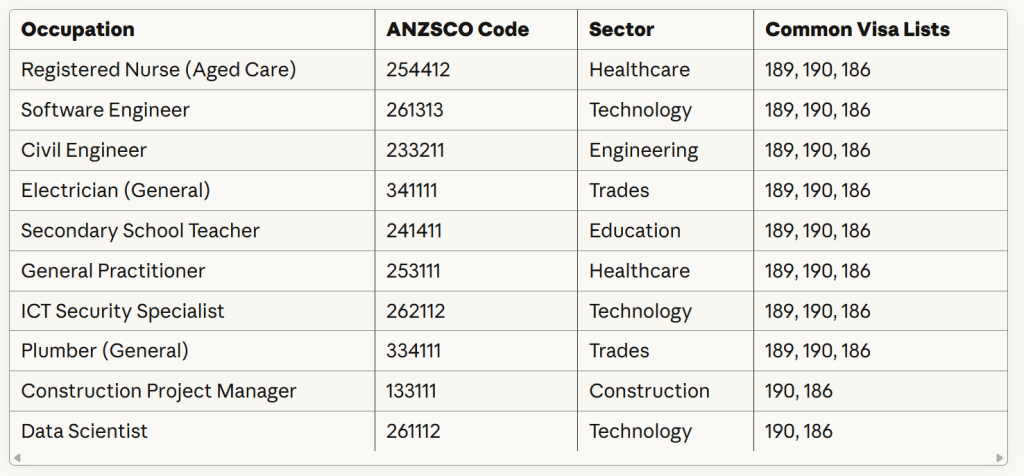
If your occupation appears on this list, you’re in the priority lane.
4. How to Assess Your Eligibility (Points System Explained)
Eligibility for Australian skilled migration is a two-gate process.
First, you must be qualified (meet baseline standards). Second, you must be competitive (score high enough to be selected).
Gate 1: The Skills Assessment (Mandatory First Step)
Before you can submit an EOI, you must have your Canadian qualifications and experience formally assessed by the correct Australian authority.
This validates that your credentials meet Australian standards.
Key Assessment Authorities for Canadians:
- VETASSESS: General professional occupations (marketing, management) and many trades
- Australian Computer Society (ACS): All IT, data science, and cybersecurity professionals
- Trades Recognition Australia (TRA): Trade occupations for migration
- Engineers Australia: All professional engineering occupations
- AHPRA/Medical Board of Australia: Medical professions
The Hidden Trap:
The assessing authority may deduct years from your work experience.
Example: You have 10 years as a software engineer. ACS assesses your degree and determines that your skill level was only met after 2 years of post-qualification work. They deduct those 2 years. Your 10 years becomes 8 years.
This can drop you from 15 points to 10 points—or worse.
Plan for this. Get assessed early. Don’t assume your full experience counts.
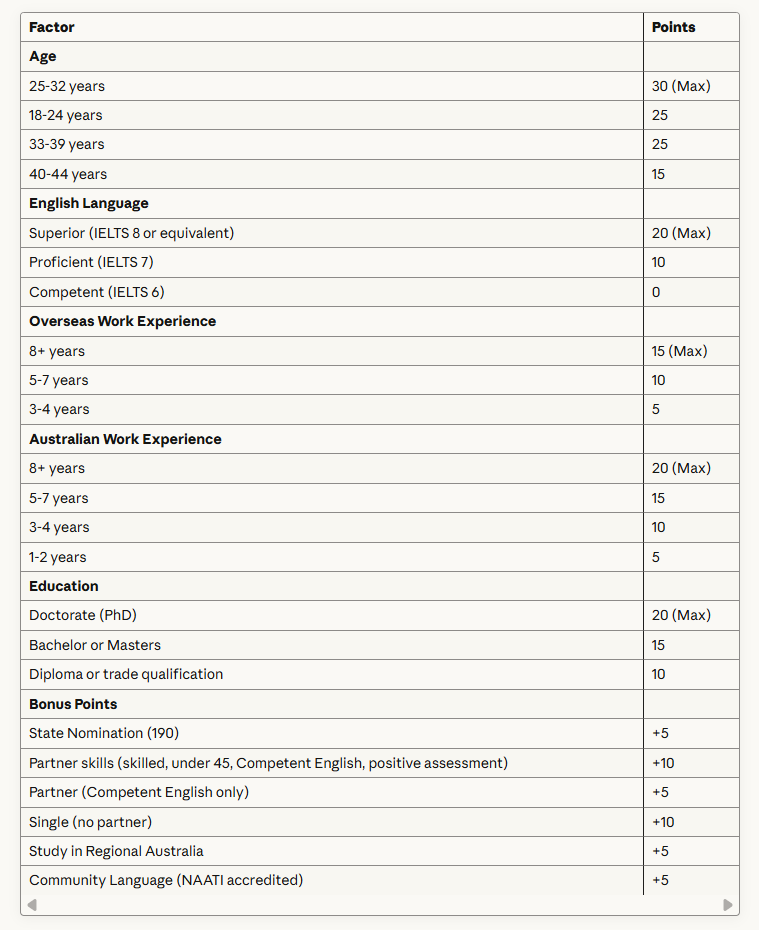
Gate 2: The Points System (Minimum 65, Realistically 80-90+)
For Subclass 189 and 190 visas, your EOI is ranked using a points test.
65 points is the minimum to enter the pool. But it’s not enough to get invited.
Due to high global competition, most high-demand occupations require 80-95 points for invitation.
Australian Skilled Migration Points Test (2025-26)
Strategic Tips to Maximize Your Points
1. Ace the English Test
This is the fastest way to gain points.
For a fluent Canadian, achieving Superior English (IELTS 8 or equivalent) is realistic. It yields 20 points—a 10-point jump over Proficient.
This is non-negotiable for a competitive score.
2. Leverage Partner Skills
If your spouse or de facto partner is also a skilled professional:
- Under 45, Competent English, positive skills assessment = +10 points
- Just Competent English = +5 points
Your partner can make or break your application.
3. Target State Nomination
Actively pursue Subclass 190 (permanent) or 491 (regional provisional).
The 5-point bonus is a game-changer. Plus, you access state-specific occupation lists with potentially lower competition.
4. NAATI Credential
If you or your partner speaks a high-demand community language (Mandarin, Arabic, Spanish, etc.), get accredited by NAATI.
That’s +5 points for passing one test.
5. The Real Cost of Moving: Housing, Healthcare, and Hidden Expenses
Let’s talk money.
Australia offers high salaries. But the cost of living—especially housing—is a significant factor.
Cost of Living: Australia vs Canada
Australia is generally more expensive. Some estimates place it 12% higher than Canada overall.
Monthly Cost Breakdown (Single Person, Excluding Rent):
- Australia: ~AUD 1,655
- Canada (for comparison): Lower, but varies by city
Groceries:
- Sydney: AUD 190/month
- Toronto: AUD 120/month
Utilities:
- Sydney: AUD 330/month
- Toronto: AUD 150/month
You’ll notice the difference immediately.
The Housing Challenge
This is the biggest financial hurdle.
Australia is in a well-documented housing crisis. Low vacancy rates. Tight rental markets. Rapidly rising property prices.
Median House Prices (Late 2025):
Median Weekly Rent (Q2 2025):
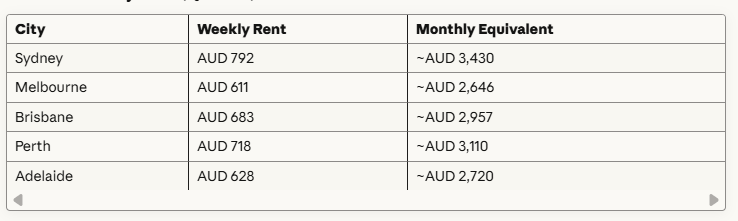
For Comparison:
- Toronto: ~CAD 1,800/month (1-bedroom city center)
- Vancouver: ~CAD 2,200/month
Universal Advice for New Arrivals:
Rent for at least 6-12 months before buying.
This gives you time to understand suburbs, commute times, school catchments, and where you actually want to settle.
Don’t rush into property ownership. The market is complex and location-dependent.
Healthcare Costs
On day one as a permanent resident, visit Services Australia with your passport and visa grant notification. Enroll in Medicare immediately.
Medicare covers:
- GP visits (often bulk-billed at no out-of-pocket cost)
- Free treatment in public hospitals
Then call a private health insurer.
To avoid Lifetime Health Cover penalties, take out hospital cover as soon as possible after age 31.
Budget AUD 150-300/month for private health insurance (varies by age, coverage level, and family size).
This is a new expense you don’t have in Canada. Factor it in.
6. Best Australian Cities for Your Career and Lifestyle
The “best” city is a three-way trade-off: job opportunities, cost of living, and lifestyle.
Sydney: The Economic Engine
Strengths:
- Unmatched for careers in finance, IT, media, and professional services
- Highest salaries in Australia
- Global city with a diverse culture
- Strong Canadian expat community
Challenges:
- The highest cost of living in Australia
- Most expensive housing market (median house $1.57M)
- Competitive rental market
Best For: Finance professionals, tech leaders, media professionals who want maximum career opportunities and can afford premium costs.
Melbourne: The Cultural Capital
Strengths:
- Major hub for tech, engineering, arts, education, and healthcare
- European-style city culture (cafes, arts, festivals)
- Strong job market across diverse sectors
- Excellent public transport
Challenges:
- Cost of living rivals Sydney
- The weather is more variable (still mild compared to Canada)
Best For: Creative professionals, educators, healthcare workers, and engineers who value culture and lifestyle diversity.
Brisbane: Fast-Growing Affordability
Strengths:
- More affordable than Sydney/Melbourne
- Sub-tropical climate (warm, sunny)
- Strong demand in healthcare, construction, and education
- Fastest-growing major city
Challenges:
- Smaller job market than Sydney/Melbourne
- Prices are rising rapidly as more people move there
Best For: Families, healthcare professionals, and construction workers seeking affordability with good growth prospects.
Perth: Mining, Engineering, and Outdoor Lifestyle
Strengths:
- Hub for mining, oil & gas, engineering
- Incredible outdoor lifestyle (beaches, perfect climate)
- Mediterranean weather
- Lower cost than East Coast cities
Challenges:
- Most geographically isolated major city in the world
- Limited career diversity outside the mining/resources sector
Best For: Engineers, mining professionals, and tradespeople who want an outdoor lifestyle and resource sector opportunities.
Adelaide: The Affordable Sleeper
Strengths:
- Most affordable major mainland capital
- A growing economy in defense, technology, and healthcare
- Excellent quality of life
- Strong South Australia state nomination program
Challenges:
- Smaller job market
- Quieter, “big country town” feel
Best For: Tech professionals, healthcare workers, and skilled trades seeking maximum affordability with growing opportunities.
Canberra: Government and Research
Strengths:
- National capital with stable government employment
- High salaries in public service and research
- Excellent infrastructure
- Strong education sector
Challenges:
- Smaller, quieter city
- Government-dominated economy (less diverse)
Best For: Public service professionals, researchers, and educators who want stability and high incomes.
Strategic Insight
A Canadian IT professional will see the most job ads in Sydney. But housing costs might negate the salary premium.
Adelaide, with a slightly lower salary but dramatically lower housing costs, often results in higher net disposable income and a better quality of life.
Check the state 190 nomination lists. If South Australia is actively nominating IT professionals, it’s a clear government signal of demand—plus a lower cost barrier.
That’s strategically superior to Sydney for many applicants.
<a name=”licensing”></a>
7. The Professional Licensing Trap (And How to Avoid It)
This is the most critical section of this entire guide.
Most skilled migrants don’t understand this distinction—and it costs them months of lost income and thousands in additional expenses.
The Critical Distinction
Skills Assessment (for the VISA):
- Completed by VETASSESS, ACS, TRA, Engineers Australia, etc.
- Purpose: Satisfy the Department of Home Affairs that your qualifications meet Australian standards
- Outcome: Allows you to apply for and receive your visa
Professional Licensing/Registration (for the JOB):
- Separate processes managed by different bodies
- Purpose: Legal authorization to practice in regulated professions in Australia
- Outcome: Allows you to actually work in your field
The Trap:
Many professionals arrive with a “positive” skills assessment and permanent visa—then discover they’re legally barred from working.
Real Examples
Canadian Doctor:
- Cannot practice until assessed by the Australian Health Practitioner Regulation Agency (AHPRA)
- Must follow a specific pathway for Canadian graduates
- May require bridging exams or supervised practice
- Timeline: 6-12 months minimum
Canadian Lawyer:
- Must be admitted to the State Bar (each state has different)
- May require additional exams or practical legal training
- Canadian law credentials don’t automatically transfer
Canadian Electrician:
- Provincial electrical ticket not recognized
- Must obtain a state-based electrical license
- Almost always requires Australian-specific study and gap training
- Timeline: 3-12 months
Canadian Engineer:
- Skills assessment from Engineers Australia is sufficient for a visa
- BUT to use the title “Professional Engineer,” one must apply for Chartered status
- Some roles require this designation
The Expert-Level Strategy
Start professional re-licensing research at the exact same time as visa research.
Budget 6-12 months and several thousand dollars for:
- Gap training courses
- Bridging programs
- Professional exams
- Supervised practice requirements
- Application fees
Factor this “professional gap” into your financial plan.
Save 6-12 months of living expenses beyond your initial settlement funds.
This is the difference between a successful transition and a failed one.
Action Step: Visit your profession’s Australian regulatory body website before you apply for your visa. Understand the full pathway to licensure, not just visa eligibility.
8. Your Step-by-Step Action Plan
Here’s exactly what to do next.
Phase 1: Qualification Assessment (Weeks 1-4)
Step 1: Check if your occupation is on the relevant skilled occupation list
- Visit: https://immi.homeaffairs.gov.au/
- Search for “skilled occupation lists”
- Confirm your ANZSCO code
Step 2: Identify your skills assessment authority
- Visit: https://immi.homeaffairs.gov.au/visas/working-in-australia/skills-assessment/assessing-authorities
- Determine which body assesses your occupation
Step 3: Calculate your initial points score
- Use official calculator: https://immi.homeaffairs.gov.au/ (search “points test”)
- Be conservative with work experience (expect deductions)
Step 4: Book and take an English proficiency test
- Target Superior English (IELTS 8 or equivalent)
- Results valid for 3 years
Phase 2: Skills Assessment Application (Weeks 5-20)
Step 5: Gather all documentation
- Detailed employment references on company letterhead
- University transcripts and degree certificates
- Professional certifications
- Employment contracts and pay slips
- Job descriptions and organizational charts
Step 6: Submit skills assessment application
- Follow authority-specific requirements exactly
- Processing time: 6-12 weeks typically
- Cost: AUD 500-1,000+ depending on authority
Phase 3: Multi-Pronged Visa Strategy (Weeks 12+)
Step 7: Submit EOI for Subclass 189
- Create a SkillSelect account
- Complete EOI with assessed occupation
- Update every 60 days to maintain currency
Step 8: Research and apply for State Nomination (190)
- Identify states targeting your occupation
- Review state-specific requirements
- Submit ROI directly to states
- Apply to multiple states simultaneously
Step 9: Job search for Employer Sponsorship (186)
- Target companies known to sponsor (larger firms, multinationals)
- Use LinkedIn, Seek, and Indeed
- Network through professional associations
- Mention visa status and willingness to relocate in applications
Phase 4: Professional Licensing Research (Concurrent)
Step 10: Contact the professional regulatory body
- Understand full licensing requirements
- Identify gap training or bridging programs
- Budget time and money for this process
Phase 5: Invitation and Application (Variable)
Step 11: When you receive the invitation (for 189/190)
- You have 60 days to submit a full visa application
- Gather police certificates, health examinations, and financial evidence
- Submit a complete application with all supporting documents
- Application fee: AUD 4,770 (primary applicant, 2025-26)
Step 12: Visa processing
- Processing time: 5-10 months typically
- Respond promptly to any requests for additional information
Phase 6: Pre-Arrival Planning (After Grant)
Step 13: Financial preparation
- Save 6-12 months’ living expenses (beyond settlement funds)
- Research private health insurance options
- Understand initial accommodation options
Step 14: Job search intensifies
- If arriving on 189/190 without a job
- Leverage expat networks
- Join professional associations
- Attend networking events virtually
Step 15: Logistics planning
- Book flights
- Arrange initial accommodation (short-term rental, Airbnb)
- Plan what to ship vs. what to sell
- Notify Canadian bank (maintain account for initial period)
Phase 7: Arrival and Settlement (First 90 Days)
Step 16: Day 1 priorities
- Enroll in Medicare (bring passport, visa grant notification)
- Apply for Tax File Number (TFN)
- Open an Australian bank account
Step 17: Professional licensing application
- Submit all required documentation
- Begin gap training if required
- Budget for this timeline
Step 18: Housing search
- Rent in the target suburb initially
- Research school catchments if relevant
- Attend open houses
- Understand the local market before buying
Step 19: Network building
- Join a professional body
- Attend expat meetups (Network Canada, Meetup groups, InterNations)
- Connect with the Canadian community
Step 20: Job search (if not already secured)
- Apply role-by-role with tailored applications
- Highlight international experience as an asset
- Be patient with “local experience” bias
- Network aggressively
Frequently Asked Questions
Q: How long does the entire process take from start to permanent residency in Australia?
A: Realistically, 12-18 months total. Skills assessment: 2-3 months. Waiting for EOI invitation: 2-8 months (varies by occupation and points score). Visa processing after invitation: 5-10 months. Timeline for employer sponsorship can be faster if you secure a job offer early.
Q: Can I bring my family to Australia?
A: Yes. You can include your spouse/partner and dependent children under 23 in your initial application. They receive permanent residency with you. Costs increase with additional applicants.
Q: What if my points score is only 65 in Australian points grid?
A: 65 points enter you in the pool, but it is rarely enough for an invitation to high-demand occupations. Focus on increasing points: achieve Superior English (+10-20 points), leverage partner skills (+5-10 points), and pursue state nomination (+5 points). Consider the 186 employer sponsorship pathway instead.
Q: Do I need a job offer before applying for an Australian PR?
A: Not for Subclass 189 or 190 visas. These are independent pathways. You DO need a job offer for Subclass 186 employer nomination. Most successful candidates pursue all three pathways simultaneously.
Q: How much money do I need to bring to Australia?
A: There’s no official minimum for permanent skilled visas. However, budget realistically: first month’s rent + bond (AUD 5,000-8,000), initial living expenses (AUD 3,000-5,000/month), professional licensing costs (AUD 2,000-5,000), emergency fund (3-6 months’ expenses). Total: AUD 25,000-40,000+ minimum recommended.
Q: Will my Canadian degree be recognized in Australia?
A: For visa purposes, yes, that’s what the skills assessment validates. For employment, most employers recognize Canadian degrees as high-quality. For regulated professions (medicine, law, teaching, trades), you’ll need additional professional licensing.
Q: Can I visit Australia on a tourist visa to “test the waters” first?
A: Yes, but it’s not required. Canadians can enter Australia on an Electronic Travel Authority (ETA) for tourism. However, you cannot work or submit a visa application while in Australia on a tourist visa. Better strategy: visit major cities, attend networking events, conduct informational interviews, then return to Canada to lodge your skilled visa application offshore.
Q: What happens if my Australian PR visa is refused?
A: You lose your application fee (AUD 4,770+). You may be able to appeal or reapply depending on the refusal reasons. This is why using an experienced immigration professional can be valuable; they ensure your application is complete and correctly presented the first time.
Q: How does the 5-year travel facility work in Australia as a Permanent Resident?
A: Your permanent visa allows unlimited re-entry to Australia for 5 years from the grant date. After 5 years, the visa remains valid (you’re still a permanent resident), but you need a Resident Return Visa (RRV) to re-enter Australia if you travel internationally. RRV requirements: evidence you’ve maintained ties to Australia.
Q: Can I apply for Australian citizenship?
A: Yes. After living in Australia for 4 years (including at least 1 year as a permanent resident), you can apply for Australian citizenship.
Requirements: pass citizenship test, meet residence requirements, demonstrate character. Australia allows dual citizenship with Canada; you don’t have to give up your Canadian citizenship.
Make Your Move With Expert Guidance
Here’s what you know now:
Australia is actively recruiting skilled Canadian professionals in structural shortage occupations.
The data proves migrants succeed. The lifestyle benefits are real. The career opportunities are substantial.
But the process is complex. Skills assessment requirements are detailed. Points calculations are nuanced. Professional licensing is a separate hurdle.
One mistake—a miscalculated points score, an incorrectly submitted skills assessment, or missing the professional licensing requirement – can cost you months of time and thousands of dollars.
For personalized guidance on your Canada to Australia migration pathway, contact Amir Ismail at www.amirismail.com/book-a-consultation.
With 34+ years of experience across Canadian, American, Australian, and global immigration systems, Amir and his team can assess your specific situation, calculate your realistic points score, identify the fastest pathway for your occupation, and navigate the skills assessment and visa application process.
With offices in Toronto, Dubai, and Karachi, we’ve helped over 25,000 clients successfully achieve their migration goals.
Your next chapter starts with a strategic plan. Let’s build yours.