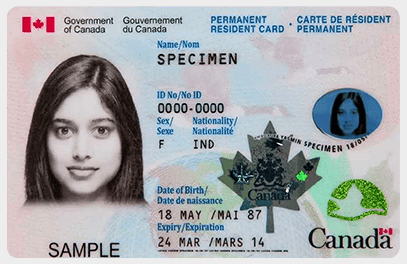

You worked hard for your PR. Now you need to keep it. This guide explains the 730-day rule, the exceptions, and exactly what to do if you’re worried you haven’t met your obligation.
Canadian permanent residents must live in Canada for at least 730 days out of every 5-year period. This is your residency obligation. Miss it, and you risk losing your PR status.
This guide covers everything you need to know. The rule itself. The exceptions. What happens at PR card renewal. What happens at the border. And what to do if your numbers are not where they need to be.
This page is updated to reflect IRCC policy as of March 2026. All references link to official government sources.
In This Guide
What is the Canadian PR Residency Obligation?
Your residency obligation is the minimum time you must spend in Canada to keep your permanent resident status. The rule comes from Section 28 of the Immigration and Refugee Protection Act (IRPA).
The law is straightforward. You must be physically present in Canada for at least 730 days in any 5-year period. That works out to roughly 2 out of every 5 years.
IRCC does not care which 730 days they are. They can be scattered over months and years. The calculation is always a rolling 5-year window looking back from the date you’re assessed.
The 730-day residency obligation is established under Section 28 of the Immigration and Refugee Protection Act (IRPA). Always verify your status using the IRCC Secure Account.
How Many Days Do You Need to Live in Canada?
The number is 730 days. Not 729. Not “most of the year.” Exactly 730 days in any rolling 5-year window.
Here is how to think about it. If IRCC checks your status today, they look at where you were for the past 5 years. You need 730 of those days to have been spent inside Canada.
That 5-year window moves every day. It is not fixed from when you got your PR card. So even if you missed your obligation in year three, you can recover over time by staying in Canada for longer stretches.
| Rule | Details |
|---|---|
| Minimum Physical Presence | 730 days in any 5-year period |
| Calculation Window | Rolling 5 years from date of assessment |
| Governing Law | IRPA Section 28 |
| PR Card Renewal Form | IMM 5444 (includes Appendix A) |
| Assessment Trigger Points | PR card renewal, port of entry, IRCC review |
| Exception 1 | Time abroad with a Canadian citizen spouse |
| Exception 2 | Time abroad with a Canadian employer |
| Exception 3 | Time abroad as a dependent child of a PR holder |
| Border Officer Authority | Can assess obligation on re-entry under IRPA s.44 |
| Appeal Body | Immigration Appeal Division (IAD) |
What Counts as Physical Presence in Canada?
Only days spent physically inside Canada count. This means your body needs to be on Canadian soil.
A day counts if you are in Canada for any part of that day. The day you arrive and the day you leave both count. So a short trip home can still add meaningful days to your count.
Days spent in the United States, on a cruise, or anywhere outside Canada do not count toward your 730 days. Not unless one of the three exceptions applies.
Many PR holders count US transit days or Caribbean cruise stops as Canadian presence. They do not count. Only time with your feet on Canadian soil adds to your 730 days.
What Are the Exceptions to the 730-Day Rule?
Three situations allow time spent outside Canada to count toward your 730-day requirement. These are not loopholes. They are written directly into IRPA Section 28.
With a Canadian Citizen Spouse
Time spent abroad with your Canadian citizen spouse or common-law partner counts toward your obligation. You must be accompanying them. The relationship must be genuine and documented.
IRPA s.28(2)(a)(i)With a Canadian Employer
Time spent working outside Canada for a Canadian business, the Canadian government, or a federal or provincial Crown corporation counts. The employer must be genuinely Canadian. You cannot simply incorporate a company and call it Canadian.
IRPA s.28(2)(a)(ii)As a Dependent Child of a PR
If you are a dependent child accompanying a PR parent who is abroad for one of the two exceptions above, your time abroad can also count toward your own obligation.
IRPA s.28(2)(a)(iii)Exceptions require documentation. IRCC will ask for proof. Keep employment contracts, payslips, marriage certificates, and any other records that confirm the qualifying relationship or employment. Do not assume the exception applies without evidence to back it up.
What Happens If You Don’t Meet Your Residency Obligation?
Not meeting your obligation does not automatically mean you lose your PR status. But it puts you at serious risk. Here is how the process works.
At the Border
A Canada Border Services Agency (CBSA) officer can assess your residency obligation when you re-enter Canada. If they believe you haven’t met your requirement, they can write a report under IRPA Section 44. This can lead to a departure order.
You have the right to appeal a Section 44 report to the Immigration Appeal Division (IAD). This is not a rubber-stamp process. Many clients have saved their PR status on appeal when the right evidence was presented.
At PR Card Renewal
When you apply to renew your PR card, IRCC reviews Appendix A of Form IMM 5444. This is where you document your travel history. If your days fall short, IRCC may send a procedural fairness letter before making a decision. You have a chance to respond and provide context.
Humanitarian and Compassionate Grounds
Both IRCC officers and IAD members have discretion to consider humanitarian and compassionate (H&C) factors. Long-term ties to Canada, family obligations abroad, medical situations, and other circumstances can influence the outcome. This is not a guaranteed escape. But it is a real legal avenue when the numbers alone don’t work in your favour.
In 35 years of practice, I’ve seen clients save their status when they thought all hope was gone. The IAD weighs your whole story, not just the day count. The strength of your ties to Canada matters. Your family here matters. Present the case properly, and the numbers are not always the final word.
How Do You Prove Residency Obligation Compliance?
When IRCC or a border officer asks, you need to show your physical presence in Canada. Here is what works as evidence.
- Passport stamps and entry/exit records from all travel
- IRCC travel history from your Secure Account online portal
- Tax returns (T1 General) filed with the Canada Revenue Agency
- Employment records from Canadian employers with dates
- Lease agreements and utility bills showing your Canadian address
- Children’s school records in Canada
- Credit card and bank statements showing Canadian transactions
- Health card renewal records from your province
Keep your passports even after they expire. They contain entry and exit stamps that prove your travel history. Throwing away an old passport can create a gap in your documentation that is very hard to fill later.
What is Appendix A on the PR Card Renewal Form?
Appendix A is the residency obligation section of Form IMM 5444, the PR card renewal application.
In Appendix A, you list every trip outside Canada over the past 5 years. You record dates, destinations, and the reason for travel. You also declare whether any time abroad qualifies under one of the three exceptions.
IRCC uses Appendix A to calculate your physical presence. Be precise. Inaccuracies, even unintentional ones, can create serious problems with your application.
Have an RCIC review your Appendix A before you submit your renewal. A calculation error or a missing exception claim can turn a straightforward renewal into a much bigger problem. The cost of a review is far less than the cost of fixing a refused application.
Frequently Asked Questions
How Amir Ismail & Associates Can Help
Residency obligation cases are among the most sensitive files we handle. Someone comes in knowing they’ve been away too long. They’re scared. Sometimes they’ve been away to care for a parent. Sometimes a job abroad ran longer than planned. Sometimes life happened.
We’ve been navigating these cases since before most of today’s immigration consultants were in school. Here is what we do.
Residency Calculation Review
We go through your travel history in detail. We calculate your actual days. We identify qualifying exceptions you may not know you have. We tell you exactly where you stand before you submit anything to IRCC.
PR Renewal Application Support
We prepare your IMM 5444 and Appendix A with precision. We include supporting documentation, exception claims, and a strong cover letter where the situation calls for it.
Appeal Representation
If IRCC has already raised concerns or a border officer issued a report, we build your IAD appeal. We know how to present humanitarian and compassionate evidence in a way that moves decision-makers.
Related Guides
What Happens If You Don’t Meet Your Residency Obligation?
Border findings, IAD appeals, H&C grounds explained step by step.
How to Track and Prove Your Days in Canada
Documents, tools, and the IRCC travel history portal explained.
Time Outside Canada: What Counts Toward Your 730 Days?
The three exceptions explained with documentation requirements.
Residency Obligation at PR Card Renewal: Appendix A Guide
Form IMM 5444 Appendix A explained. What to include and how to avoid errors.
Are You Sure You’ve Met Your Residency Obligation?
Don’t find out at the border. Don’t find out when IRCC sends a procedural fairness letter. Book a Residency Obligation Assessment with our team. We’ve been doing this since 1991. We’ll tell you exactly where you stand.
Book Your Residency AssessmentWant one page that ties it all together? See our guide to keeping your PR status.
Already a permanent resident? Our guide for permanent residents covers landing, your PR card, the residency rules and travel in one place. See also our guide to travelling as a PR.