
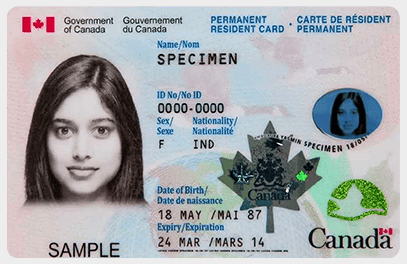
Most permanent residents think they understand this rule. They count their trips. They feel confident. Then they hit a border crossing or submit a card renewal and everything falls apart.
Want one page that ties it all together? See our guide to keeping your PR status.
I have seen this happen to smart, careful people. Not because they were careless. Because the 730-day residency rule is genuinely misunderstood.
The government does not check your days against a fixed five-year block from your landing date. It checks against a rolling window measured backward from the moment you interact with IRCC. That one word, “rolling,” changes everything.
This post uses real scenarios to show you exactly how the rule works under IRPA Section 28, where people go wrong, and what evidence you need to protect yourself. For a full overview of your obligations as a PR, see our guide on Canada PR residency obligations.
What does the 730-day residency rule actually mean?
The five-year period is not counted from when you landed. It is the 1,825 days immediately before the moment of assessment. That moment could be a PR card renewal, a border crossing, or a citizenship application.
This is what I call the Rolling Window. The window moves every single day. Old Canada days eventually drop off the back end. New absence days pile up. Understanding this one concept will save your status.
Scenario 1: Why “banking” days does not work
Elena landed as a PR on January 1, 2020. She spent 2020 and 2021 entirely in Canada, roughly 730 days. She assumed she was done. She moved abroad and stayed for three years. In early 2026, she tries to renew her PR card.
Here is the problem. By early 2026, her rolling window no longer reaches back to January 2020. Those early Canada days have leaked out of the calculation. The window now covers approximately 2021 to 2026, and most of that time she was abroad.
She is likely inadmissible.
The lesson: you cannot bank days at the beginning of your PR journey and spend them later. The window keeps moving. You have to stay compliant at every moment of assessment, not just once.
Does a partial day in Canada count toward the 730-day requirement?
Scenario 2: Marcus crosses the US border every week for work
Marcus lives in Windsor and works in Detroit. He leaves Canada every Friday morning and returns every Sunday evening. He has been telling himself he earns zero days on travel days.
| Day | Where Marcus Is | Marcus’s Assumption | What IRCC Counts |
|---|---|---|---|
| Friday | Departs Canada at 9 AM | 0 days | 1 day |
| Saturday | Entirely in the USA | 0 days | 0 days |
| Sunday | Returns to Canada at 8 PM | 0 days | 1 day |
| Total | 0 days | 2 days |
Marcus is undercounting himself by two days every single weekend. Over a year, that is more than 100 days he is leaving off his calculation.
Two things that do not count: transit time in a US airport, and days on a cruise ship in international waters. Unless a statutory exception applies, your feet must touch Canadian soil.
To learn exactly how to document and prove your days before an application, read our guide on how to track and prove your days in Canada as a permanent resident.
What are the exceptions that let you count days abroad?
These exceptions are real and powerful. But they are also heavily scrutinized. You need documented evidence for all of them. For a complete breakdown of every exception and how IRCC assesses them, see our dedicated resource on time outside Canada and residency obligation exceptions.
Exception 1: Accompanying a Canadian citizen spouse
Sarah is a PR. Her husband holds Canadian citizenship. Their time living together in Dubai counts toward her residency obligation. But two things trip people up here constantly.
- If Sarah’s spouse is also a PR, this exception does not apply. It requires a Canadian citizen.
- The exception requires actual cohabitation. You must be living together, not just legally married.
Evidence Sarah Would Need
- Marriage certificate proving the relationship
- Joint lease or utility bills showing cohabitation in Dubai
- Spouse’s Canadian passport confirming citizenship status
Exception 2: Posted abroad by a Canadian employer
Raj is a software engineer at a Toronto firm. His company drafted a formal assignment letter requiring him to work in their London office. Raj did not choose to work remotely from London. His employer required it.
| Situation | Qualifies for Exception? |
|---|---|
| Raj chooses to work remotely from London | No |
| Raj’s employer formally posts him to the London office | Yes |
IRCC scrutinizes these arrangements, especially when the applicant owns or controls the Canadian company. If Raj owned that Toronto firm, he would face much higher evidentiary requirements. The posting cannot look like something designed specifically to manufacture compliance days.
Exception 3: Dependent child of a qualifying PR parent
Raj’s son Leo is a PR living in London because his father’s employer posting brought the family there. Leo’s days abroad count because his father’s days count under the employer exception.
This is a chain. Break the parent’s link and the child’s link breaks with it. The exception also applies if the child’s PR parent is abroad with a Canadian citizen spouse.
What documents do you need to prove your days in Canada?
| Evidence Type | Weight | Why It Matters |
|---|---|---|
| Passport stamps and IRCC travel history | Strongest | Official CBSA entry data. Authoritative in any assessment. |
| T1 tax returns and T4 slips | Strong | Proves Canadian tax residency and employment history. |
| Leases, utility bills, Canadian bank statements | Supporting | Shows you maintained an active Canadian life and household. |
Your IRCC Secure Account (via GCKey) shows your Canadian entry history. Check it before you do anything. But it only records entries, not exits. Cross-reference it against your passports, including expired ones. Never throw out an old passport.
If your records are incomplete or the portal does not cover a full five years, file an Access to Information and Privacy (ATIP) request. ATIP can pull CBSA entry records that the standard portal will not show you. Start this process well before your renewal deadline because it takes time.
For the full step-by-step process on preparing your documents before a card renewal, see our guide on residency obligation requirements at PR card renewal.
What happens if you fall below 730 days?
Scenario 6: Amina stayed abroad to care for a terminally ill parent
Amina has only 365 days in Canada over her five-year window. She does not qualify for any of the three statutory exceptions. Her absence was not with a citizen spouse, not for an employer posting, and not as a dependent child of a qualifying parent.
What she can do is appeal to the Immigration Appeal Division (IAD) on humanitarian and compassionate (H&C) grounds. H&C does not add days to her count. It asks a judge to forgive the shortfall based on the circumstances.
The IAD weighs four things:
- The best interests of any children involved
- Her ties to Canada: property, employment history, family connections
- Why the absence happened and whether it was genuinely beyond her control
- How large the shortfall is. A 10-day gap is treated very differently from a 360-day one.
How do you track your 730-day compliance right now?
- Track the rolling window daily. Every day you are outside Canada, check whether you are losing a Canada day from the back of your five-year look-back. The window moves whether you are watching or not.
- Claim your exceptions with evidence. If you qualify under IRPA s.28(2)(a), document it now. Get the certificates, contracts, and joint bills before you need them, not after.
- Keep your paper trail permanent. Expired passports, T1 tax returns, lease agreements, and bridge toll receipts are your protection in an audit. None of them are replaceable after the fact.
- Know your exact number. Pull your IRCC travel history. File an ATIP request if records are incomplete. Calculate your days precisely before you touch anything IRCC-related.
Frequently Asked Questions
What is the 730-day residency requirement for Canadian permanent residents?
Under IRPA Section 28, permanent residents must be physically present in Canada for at least 730 days in every rolling five-year period to maintain their status. The five-year window is measured backward from the date of assessment, not from the date of landing.
Does a partial day in Canada count toward the 730-day requirement?
Yes. Any part of a day in Canada, including your arrival day and departure day, counts as one full day under IRPA. Transit time in a US airport or days in international waters do not count. Your feet must touch Canadian soil.
Can I count days abroad if I am married to a Canadian citizen?
Yes, if you are living with your Canadian citizen spouse abroad, those days count under IRPA s.28(2)(a)(i). This exception does not apply if your spouse is a permanent resident rather than a citizen. Cohabitation must be documented with joint leases or utility bills.
Does working remotely for a Canadian company count toward my PR residency?
No. Remote work you choose does not qualify. You must be formally assigned to a position abroad by your Canadian employer under a documented posting arrangement. IRCC draws a sharp distinction between self-directed remote work and an employer-directed posting.
What happens if I fall short of 730 days as a Canadian permanent resident?
You may be found inadmissible. You can appeal to the Immigration Appeal Division on humanitarian and compassionate grounds if compelling circumstances caused the shortfall. Professional advice before any IRCC interaction is strongly recommended.
How do I find out exactly how many days I have in Canada as a permanent resident?
Log into your IRCC Secure Account via GCKey and review your travel history. Cross-reference against all passport stamps, including expired passports. If records are incomplete or do not cover the full five years, file an Access to Information and Privacy (ATIP) request to obtain your full CBSA entry history.
Not Sure Where You Stand?
You do not want to guess at your residency days. One wrong number on Appendix A is a legal declaration. Our team has guided 25,000+ clients through exactly this. Book a strategy assessment and we will calculate your days, identify your risks, and build your compliance plan.
Book Your Strategy AssessmentAlready a permanent resident? Our guide for permanent residents covers landing, your PR card, the residency rules and travel in one place. See also our guide to travelling as a PR.
More Residency Obligation and PR Card Renewal Information

Residency Obligation at PR Card Renewal: Appendix A Guide (IMM 5444) | Amir Ismail & Associates

How to Track and Prove Your Days in Canada as a Permanent Resident | Amir Ismail & Associates

What Happens If You Don’t Meet Your Canadian Residency Obligation?

Canada Residency Obligation Exceptions: 730-Day Rule Explained