If your Canadian ancestor’s birth record cannot be found, IRCC accepts two main workarounds. Baptismal or parish records can replace a birth certificate for ancestors born before civil registration was standard. And records belonging to collateral relatives, such as siblings or cousins, can help prove a family line when a direct ancestor’s own paper trail has gaps.
Since the June 2026 CIT 0014 update, you must also document your genuine efforts to obtain the missing original.
A missing record is not a dead claim. It just means your file needs a different kind of evidence. Here is how to build it.
Key Takeaways
- Ancestors born in the 1800s and early 1900s often have no civil birth record at all. That is normal, not fatal.
- Baptismal and parish records are the standard substitute, and in Quebec they often were the official record.
- Collateral relative records can bridge gaps when your direct ancestor’s documents are lost.
- IRCC now requires a written explanation plus proof of effort for every missing original, under the June 2026 documentary standard.
- Start archive requests early. Proof of citizenship files are already waiting about 19 months as of July 2026.
Why Birth Records Go Missing
Civil registration of births came late to much of Canada. Several provinces did not require it consistently until the late 1800s or even the early 1900s. Before that, the record of a birth often lived in a church register, a family Bible, or nowhere at all.
Add fires, floods, courthouse losses, and records that were simply never filed, and you get a common situation. The ancestor is real. The birth is real. The certificate does not exist.
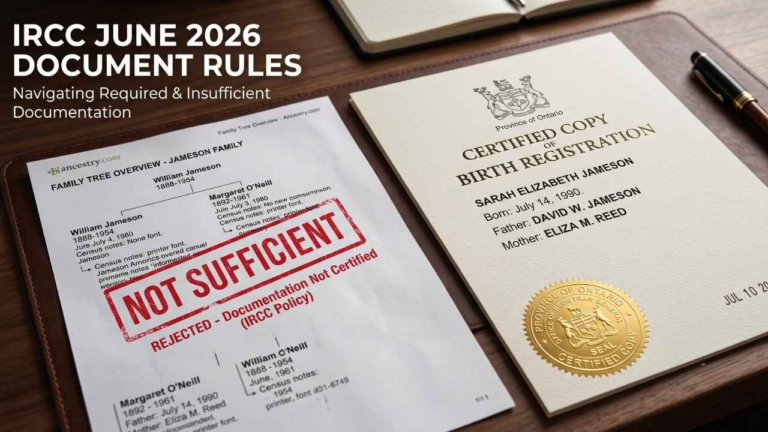
IRCC understands this. What it will not accept, especially after the June 2026 tightening, is an unexplained hole in your chain. Every gap needs a story and supporting paper. Our guide to IRCC’s new documentary standard explains the updated rules in full.
Option 1: Baptismal and Parish Records
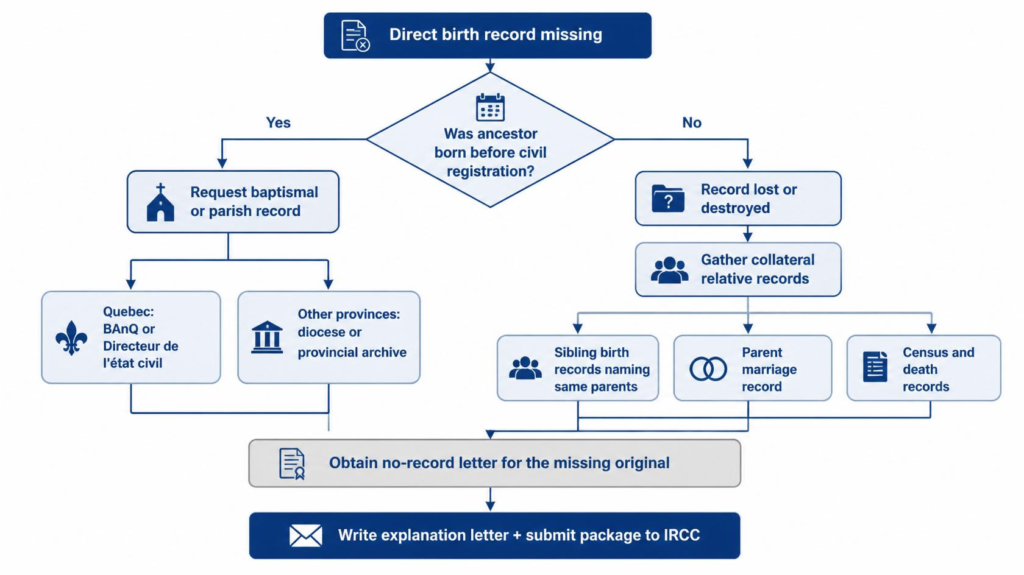
A baptismal record is a church register entry recording a child’s baptism, usually within days or weeks of birth. For pre-registration eras, IRCC treats certified copies of these records as birth evidence, because they were often the only record created at the time.
To use one, you need a certified copy from the archive that holds the register, not a photo from a genealogy site. Request it from the diocese, the provincial archive, or the church body that inherited the records.
Quebec: Requesting Parish Records from BAnQ
Quebec is the special case, and often the easiest one. For a long stretch of Quebec’s history, parish registers legally served as the civil record. Copies were deposited with the state.
For older Quebec records, request certified copies through BAnQ (Bibliothèque et Archives nationales du Québec). For more recent events, the Directeur de l’état civil is the issuing authority. Our French-Canadian ancestry guide covers which office to use for which era.
Am I a Canadian citizen by descent?
Trace your family line one generation at a time. Each link is tested against the law in force when that person was born, so you see exactly where your chain holds and where it breaks. About three minutes, and no account needed.
Check my family lineNot sure where your ancestor’s records would even be held? That question alone is worth a professional conversation. Book Your Strategy Assessment with Amir Ismail, RCIC #R412319.
Option 2: Collateral Relative Records
Collateral evidence means records belonging to your ancestor’s relatives rather than your ancestor directly. A sibling’s birth record naming the same parents. A parent’s marriage record. A census entry listing the whole household.
These records prove the family existed, lived in Canada, and included your ancestor, even when your ancestor’s own certificate is gone. IRCC weighs them as a package, not one by one.
The “Connective Tissue” Documents IRCC Wants
Collateral evidence only works if the connections are airtight. These are the documents that tie names together across generations:
- Marriage certificates linking maiden names to married names
- Legal name-change orders for any formal name change
- Death records that name parents or spouses
- Church records naming parents at baptism
If a name shifts anywhere in your chain without a document explaining it, expect IRCC to ask questions. Fix it before you file.
The following chart explains the workflow if Ancestor Birth Record is Missing and what Alternatives IRCC will likely accept.
A Real Pattern from AIA’s Casework
One case pattern we see often looks like this. A client traces their line to an ancestor born in New Brunswick in the 1880s. No civil birth record exists, because registration was inconsistent in that era. The claim looked stuck.
The file that worked combined a certified baptismal record, the ancestor’s marriage certificate, and sibling records naming the same parents. Each document alone was incomplete. Together, they proved the line beyond reasonable doubt, and the certificate was issued.
The lesson: IRCC assesses the whole chain. Your job is to leave the officer no open questions.
When to Bring in a Professional Genealogist
Bring in a genealogist when you have searched the obvious archives and still cannot locate the record, when your line crosses provinces or countries, or when name changes make the trail hard to follow. A professional genealogist knows which archives hold what, and their research log itself becomes evidence of your genuine effort.
For the IRCC side, that genealogical package still needs to be assembled into an application that meets the CIT 0014 checklist. That is where we come in. See our complete document guide for how the full file fits together.
Frequently Asked Questions
Can I get Canadian citizenship by descent without my ancestor’s birth certificate?
Yes, one can get Canadian Citizenship by descent in many cases. IRCC accepts baptismal or parish records for ancestors born before civil registration was standard, and collateral relative records where the direct record is lost. You must also include a written explanation and proof that you genuinely tried to obtain the original.
What is a u0022no-record letteru0022 and do I need one?
A no-record letter is written confirmation from a vital statistics office or archive that no record exists for the event you requested. Since the June 2026 documentary standard, this letter is your strongest proof of genuine effort. Request one whenever an archive search comes up empty.
Are family Bibles or personal letters acceptable evidence?
Family Bibles can support a file, but they cannot carry it. IRCC’s June 2026 standard requires records from original source authorities wherever possible. Personal items work best alongside official collateral records, not instead of them.
How long do archive requests take?
It varies by province and by demand. Quebec archives in particular have seen heavy request volumes since Bill C-3 took effect. Build archive turnaround into your timeline, because the proof of citizenship queue itself is already around 19 months. See our processing time breakdown.
Missing records are solvable. Unexplained gaps are not. If your family line has a hole and you want a clear plan to close it, Book Your Strategy Assessment.
About the Author: Amir Ismail is a Regulated Canadian Immigration Consultant (RCIC #R412319), licensed by the College of Immigration and Citizenship Consultants (CICC). He founded Amir Ismail & Associates in 1991 and has served 25,000+ clients from offices in Toronto, Dubai, and Karachi. Book Your Strategy Assessment for advice specific to your case.
Access more Canadian Citizenship By Descent Resources by Amir Ismail
Proof of Citizenship From the US: Does a Representative in Canada Save Time?
A representative in Canada does not move your proof of citizenship from the US to…

Canadian Citizenship for an Adopted Child Abroad: Grant or PR?
If you are a Canadian in the US who adopted a child, you have two…

Canadian Passport Application From the USA: Guarantor, References and Fees
A Canadian passport application from the USA is a mail-in process. You fill out form…
British Home Children Citizenship by Descent: Who Qualifies Under Bill C-3
Many descendants of British Home Children can claim Canadian citizenship by descent. The key fact…
Proof of Canadian Citizenship Wait by Application Month: Why Your Date Matters
Your proof of citizenship wait by application month is not one number. The processing times…

American Dual Citizenship With Canada: What Changes and What Does Not
Yes, you can keep both. American dual citizenship with Canada is legal in both countries,…

Moving to Canada as a New Citizen by Descent: Health Coverage by Province
If you are moving to Canada as a new citizen by descent, your health coverage…
Is 1867 a Cut-Off for Citizenship by Descent? Why Older Ancestors Still Count
No, 1867 is not a legal cut-off, so you can still pursue citizenship by descent…
Bill C-3 Second Generation Children: Are Your Kids Canadian?
If you are an American who became Canadian under Bill C-3, your children born before…

After Your Citizenship Certificate: What It Does Not Give Americans
After your Canadian citizenship certificate arrives, you are a Canadian citizen on paper, but the…

Section 8 Lost Canadians: Bill C-3 Gives Back Citizenship Lost at Age 28
Section 8 Lost Canadians: Bill C-3 Gives Back Citizenship Lost at Age 28 If you…

Bill C-3 Reversal Risk: Could You Lose Citizenship by Descent?
Bill C-3 Reversal Risk: Could You Lose Citizenship by Descent? By Amir Ismail, RCIC #R412319…
Proof of Canadian Citizenship Processing Time 2026 (34-Month Wait and 130,700-File Queue Explained)
Proof of Canadian Citizenship Processing Time 2026 (34-Month Wait and 130,700-File Queue Explained) IRCC’s proof…
Canadian Citizenship by Descent: Eligibility Checklist for Americans (Bill C‑3)
Do I Qualify for Canadian Citizenship by Descent? The American’s Eligibility Checklist By Amir Ismail,…
Canadian Citizenship by Descent: Complete Document Guide (Bill C-3 2025)
Baptismal Records for Canadian Citizenship by Descent: 2026 Guide
Baptismal Records for Canadian Citizenship by Descent: A Complete Ordering Guide (2026) LAST UPDATED: AUGUST…
Six Wrong Reasons People Rule Themselves Out of Canadian Citizenship by Descent
Six Wrong Reasons People Rule Themselves Out of Canadian Citizenship by Descent By Amir Ismail,…

Married to a Brand-New Canadian Citizen? What Descent Does (and Does Not) Do for You
Married to a Brand-New Canadian Citizen? What Canadian Citizenship By Descent Does (and Does Not)…
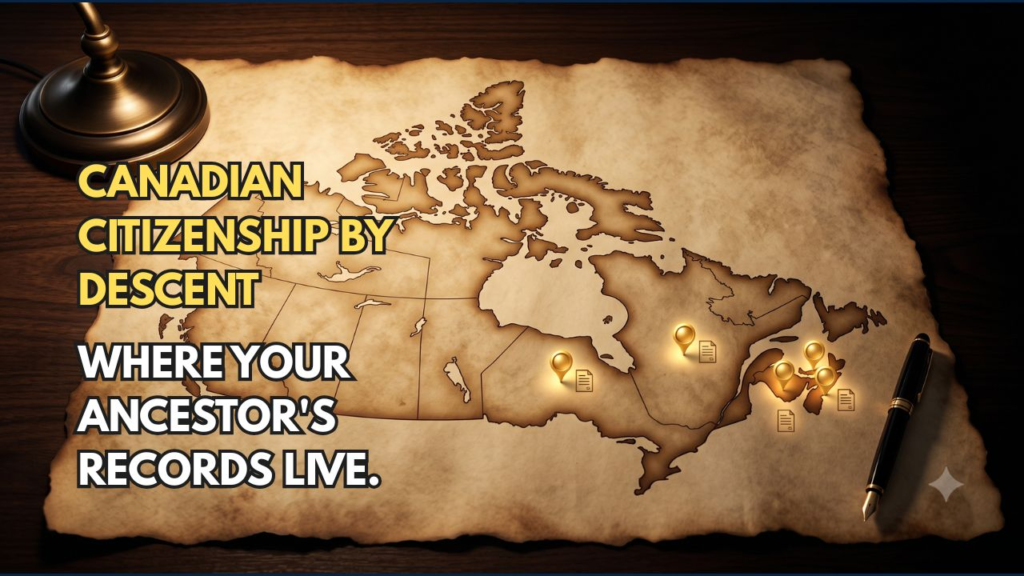
Canadian Vital Records for Citizenship by Descent: How to Find the Right Office in Every Province
Mandatory Vital Records for Canadian Citizenship by Descent (Canada‑Wide: Every Province, Every Office) By Amir…
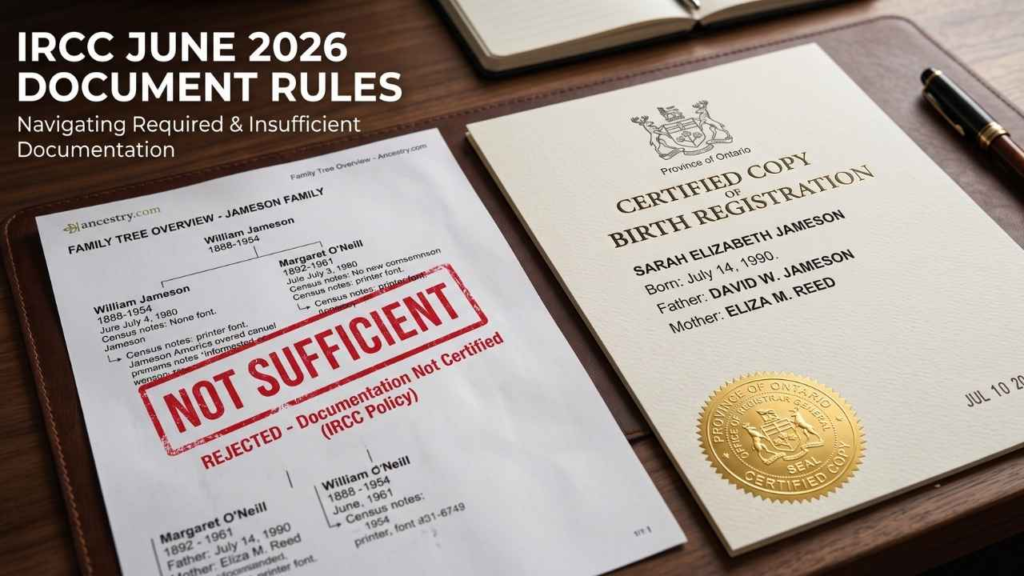
Ancestry Printouts Are Out: The Document Rules IRCC Rewrote for Citizenship by Descent in June 2026
Ancestry Printouts Are Out: The Document Rules IRCC Rewrote for Citizenship by Descent in June…