

Not sure you qualify? Take our Canadian citizenship eligibility quiz first.
You just learned you may be Canadian. Then a headline says the law could be undone. That fear is real, and it is fair to ask.
The key takeaway is: Parliament can change Bill C-3 for the future, but cancelling citizenship you already hold is far harder, because the law allows revocation only for fraud, false representation, or knowingly concealing material facts.

Key takeaways
- Repeal is possible in theory. Parliament can change any law going forward, and no party has promised to repeal Bill C-3.
- Revocation is narrow. Section 10 of the Citizenship Act allows it only for fraud, false representation, or concealing material facts.
- The Charter helps. Section 6(1) protects a citizen’s right to enter and remain in Canada, and the notwithstanding clause cannot override it.
- Your real risk is the wait. IRCC shows 33 months and about 136,000 files ahead of you.
- Children born after 15 December 2025 are most exposed. Their 1,095-day test is the layer a future government could tighten.
Can a future government repeal Bill C-3?
Yes, Parliament can change any law going forward, so a future government could amend or repeal Bill C-3. A rule change for the future is not the same as cancelling people who are already recognized as citizens. Bill C-3 took from 5 June to 20 November 2025 to pass (Parliament of Canada, LEGISinfo).
Here is the plain version. Parliament makes the law. A new Parliament can pass a new one. Nobody can honestly promise you otherwise.
What a new law can do is a separate question. We break that down in the three layers of risk below.
How hard is it to change a citizenship law in Canada?
A bill must pass the House of Commons and the Senate, then receive royal assent. Bill C-3 went from first reading on 5 June 2025 to royal assent on 20 November 2025. Any reversal would need the same public steps (Parliament of Canada).
Here is how Bill C-3 moved, step by step:
- Step 1: The House of Commons gave it first reading on 5 June 2025.
- Step 2: The House passed second reading on 22 September 2025 and sent it to committee on 9 October 2025.
- Step 3: The House passed third reading on 5 November 2025.
- Step 4: The Senate passed third reading on 19 November 2025.
- Step 5: The bill received royal assent on 20 November 2025 and came into force on 15 December 2025.
That is a long, public road. A reversal would travel the same one, with committee hearings and votes in both chambers.
Has any party promised to repeal Bill C-3?
No party has promised to repeal Bill C-3 in anything I could find. Conservative members criticised the bill at report stage in October 2025, arguing it cheapens citizenship. Criticizing a clause is not the same as promising a repeal.
As of 4 October 2026, there is no repeal bill and no platform promise to point to. We watch for both, and we will update this page if either appears.
The three layers of risk: what could change and what is much harder to touch
Think of Bill C-3 as three layers: future births, files in the queue, and people already recognized as citizens. Each layer has different legal protection, and the third is the hardest to change. Your own layer decides how worried you should be.
Find your layer with this quick map:
| Layer | Who it covers | What could change | Main protection |
|---|---|---|---|
| Layer 1: Future births | Children born or adopted abroad on or after 15 December 2025 | The 1,095-day test could be tightened | Little. Parliament can change rules for future births |
| Layer 2: Files in the queue | Applicants with no certificate yet | Evidence rules and wait times | Your claim by birth stays, but the paperwork standard can move |
| Layer 3: Already recognized | People holding a certificate or passport | A law would have to remove citizenship you hold | Citizenship Act s.10 and Charter s.6(1) |
What could change for children born after 15 December 2025?
The 1,095-day substantial connection test could be tightened for children born or adopted abroad on or after 15 December 2025. This is the layer most exposed to political change, because it governs births that have not happened yet. IRCC‘s form CIT 0555 is where a parent proves those days.
If you are a Canadian parent born abroad, the best move is to build your days in Canada and your records now. Keep tax slips, school transcripts, and rental or mortgage papers.
What could change for applications still in the queue?
Rules for evidence and processing can change while your file waits, as IRCC showed in June 2026 when it began requiring documents from the original source authority. Your claim itself does not depend on the application, because people born abroad before 15 December 2025 to a Canadian parent are citizens under the law. The real risk here is the wait, which is 33 months with about 136,000 files ahead of you (IRCC, 3 September 2026).
So the practical danger in this layer is a returned file, not a repeal. A complete file built to the current standard protects your place.
What could change for people already recognized as citizens?
A future law would have to take away citizenship that people already hold, which is very different from changing rules for new applicants. Charter section 6(1) says every citizen of Canada has the right to enter, remain in and leave Canada, and that right attaches to citizenship. This is general information, not a guarantee or legal advice.
This is the layer where you hold the most protection. The Citizenship Act also limits revocation to specific grounds, which we cover next.
When can Canada actually revoke citizenship?
Under section 10 of the Citizenship Act, the Minister can revoke citizenship only if it was obtained by false representation, fraud, or knowingly concealing material circumstances. Being born to a Canadian parent is not one of those grounds. The process starts with written notice that sets out the grounds and the materials relied on (Justice Laws, Citizenship Act s.10).
Notice the word obtained. Revocation looks at how you got citizenship, not at who your ancestors were. That is why accurate, original documents matter. A fake or altered record is the real danger, not a change in politics.
Is a surrender letter the same as revocation?
No. In June 2026, IRCC sent surrender notices to some recently approved applicants and asked them to return their paper certificates while it rechecked their documents. Section 10 revocation is a separate, formal process, and some certificates were returned after the recheck (see our full guide on the certificate surrender notices).
Check the exact wording of any letter you receive. A request to return a certificate during a review is not the same as a notice that cancels your citizenship.
What is the 60-day response right?
Section 10(3.1) gives you 60 days to respond in writing, and the deadline can be extended for special reasons. Your response can cover your personal circumstances, including whether revocation would leave you stateless (Justice Laws). The Minister must refer the case to court unless your response changes the Minister’s view or special relief is warranted.
If you ever get a formal IRCC letter, follow these steps:
- Step 1: Read the whole letter and find the deadline.
- Step 2: Write the deadline in your calendar the same day.
- Step 3: Gather the original documents behind your claim.
- Step 4: Send a complete written reply before the deadline.
- Step 5: Get advice from a licensed professional before you send it.
Could the Charter protect citizens recognized under Bill C-3?
Charter section 6(1) says every citizen of Canada has the right to enter, remain in and leave Canada. That right attaches to citizenship, and a law that stripped current citizens of status would face a hard legal fight. This is general information, not legal advice (Justice Laws, Canadian Charter of Rights and Freedoms).
Here is the detail most articles skip. Section 33, the notwithstanding clause, lets a government override section 2 and sections 7 to 15. It does not reach section 6. So the mobility right of a citizen cannot be switched off with that tool.
That does not make change impossible. Parliament can still define who becomes a citizen in the future. The hard part is removing status from people who already hold it.

Why did the Bjorkquist ruling lead to Bill C-3?
On 19 December 2023, the Ontario Superior Court of Justice ruled in Bjorkquist v. Attorney General of Canada, 2023 ONSC 7152, that the second-generation cut-off in section 3(3)(a) of the Citizenship Act breached Charter sections 6 and 15. The court suspended the effect of its ruling for six months, and the government announced on 22 January 2024 that it would not appeal. Bill C-3 is Parliament’s answer, and it removed the cut-off for people born before 15 December 2025.
The case matters for your question in one way. A court has already said that treating Canadians born abroad as lesser citizens breaches the Charter. That history makes a full return to the old cut-off for people already recognized a difficult path.
Should you apply now or wait?
Apply now if you have the documents, because waiting adds years to a queue that already runs 33 months, and a certificate is the proof that you hold citizenship. The wait is the real cost, not repeal risk, and about 136,000 files are ahead of you (IRCC, 3 September 2026). If your paperwork is not ready, use the time to collect original records first.
Waiting does not make your claim stronger. It only moves you back in line. See our guide to the current proof of citizenship processing time for the month by month picture.
Two cases need care. If your documents are incomplete, a returned file costs more than a short delay. If your child was born after 15 December 2025, check the 1,095-day proof before you file.
What if you already hold a certificate or passport?
Keep both and keep copies of every source document behind your claim. A certificate is proof of citizenship, and the passport lets you travel as a Canadian. If IRCC sends you a letter, answer it before the deadline.
Dual citizens need a valid Canadian passport to return to Canada by air, so do not wait for a trip to apply. Read more in our guide to dual citizenship with Canada.
What steps protect your claim today?
Five actions protect your claim whatever Parliament does. They follow IRCC’s own checklist. Start with the eligibility quiz.
- Step 1: Take our Canadian citizenship eligibility quiz to see which route fits you.
- Step 2: Get original-source records for every generation. Our documents guide and the province by province records guide show where to order them.
- Step 3: File a complete application, on paper if your claim runs through several generations.
- Step 4: Get the citizenship certificate, then apply for the Canadian passport.
- Step 5: Keep every IRCC letter and reply on time.
If you want a licensed professional to check your file before you send it, Book a Strategy Consultation with Amir Ismail, RCIC R412319. You can also see how we handle these cases on our citizenship by descent help page.
What would change this answer?
Four events would change what you read here: a repeal or amendment bill in the House of Commons or Senate, a federal party platform promise to reverse Bill C-3, a change to the revocation grounds in section 10, or a court ruling on the new law. None of the four exists as of 4 October 2026. We check each of them monthly and update this page, so the date at the top is the date we last confirmed it.
Not sure you qualify?
Take our Canadian citizenship eligibility quiz in about two minutes, read the Canadian citizenship guide, then Book a Strategy Consultation with Amir Ismail, RCIC R412319, to confirm your path.
Frequently asked questions about Bill C-3 and citizenship
Can a new government repeal Bill C-3?
Yes, Parliament can amend or repeal any law going forward, but a bill must pass the House of Commons and the Senate. As of 4 October 2026, no repeal bill has been introduced. A rule change for the future is different from cancelling citizenship that people already hold.
Could I lose my citizenship if Bill C-3 is reversed?
Section 10 of the Citizenship Act allows revocation only for fraud, false representation, or knowingly concealing material circumstances. A repeal would have to remove status from people who already hold it, and Charter section 6(1) protects a citizen’s right to enter and remain in Canada. This is general information, not legal advice.
When can IRCC revoke Canadian citizenship?
Only when citizenship was obtained by false representation, fraud, or knowingly concealing material circumstances (Citizenship Act s.10). You receive written notice with the grounds and 60 days to respond. The case goes to court unless your response changes the Minister’s view or special relief applies.
Is a certificate surrender letter the same as revocation?
No. The June 2026 letters asked some holders to return paper certificates while IRCC rechecked documents, and some certificates were returned after the recheck. Section 10 revocation is a separate formal process, so read the wording of any letter and answer it on time.
Should I apply now or wait?
Apply now if you have your documents. Waiting only adds to a 33-month queue of about 136,000 files (IRCC, 3 September 2026), and the certificate is your proof. If your records are incomplete, finish them first, because a returned file costs more than a short delay.
Does Bill C-3 apply to my children born after 15 December 2025?
Yes, but with a different test. A child born or adopted abroad on or after that date needs the Canadian parent, if also born abroad, to show 1,095 days in Canada before the birth or adoption. Parents prove those days on IRCC form CIT 0555.
What did the Bjorkquist ruling have to do with Bill C-3?
On 19 December 2023, the Ontario Superior Court found the second-generation cut-off breached Charter sections 6 and 15. The government did not appeal, and Bill C-3 later removed the cut-off for people born before 15 December 2025.
Ready to protect your claim? Book a Strategy Consultation and we will check your file against the current rules.
Sources checked on 4 October 2026
- Citizenship Act s.10: Justice Laws, revocation grounds and 60-day response
- Charter: Justice Laws, sections 1, 6, 15 and 33
- Bill C-3 stages: Parliament of Canada LEGISinfo
- Court ruling: Bjorkquist v. Attorney General of Canada, 2023 ONSC 7152 (CanLII)
- Suspension of the ruling: Government of Canada committee note, 5 December 2024
- No-appeal decision: Government of Canada news release, 22 January 2024
- Processing time and queue: IRCC processing times tool, 3 September 2026 update, rechecked 4 October 2026
Update log: 4 October 2026, first published. Next check: November 2026.
Amir Ismail is a Regulated Canadian Immigration Consultant (RCIC R412319) who has been associated with the immigration consulting industry since 1991.
Read More Citizenship By Descent Resources By Amir Ismail
Proof of Canadian Citizenship Processing Time 2026 (33‑Month Wait and 136,000‑File Queue Explained)
Proof of Canadian Citizenship Processing Time 2026 (33-Month Wait and 136,000-File Queue Explained) By Amir…
Canadian Citizenship by Descent: Eligibility Checklist for Americans (Bill C‑3)
Do I Qualify for Canadian Citizenship by Descent? The American’s Eligibility Checklist By Amir Ismail,…
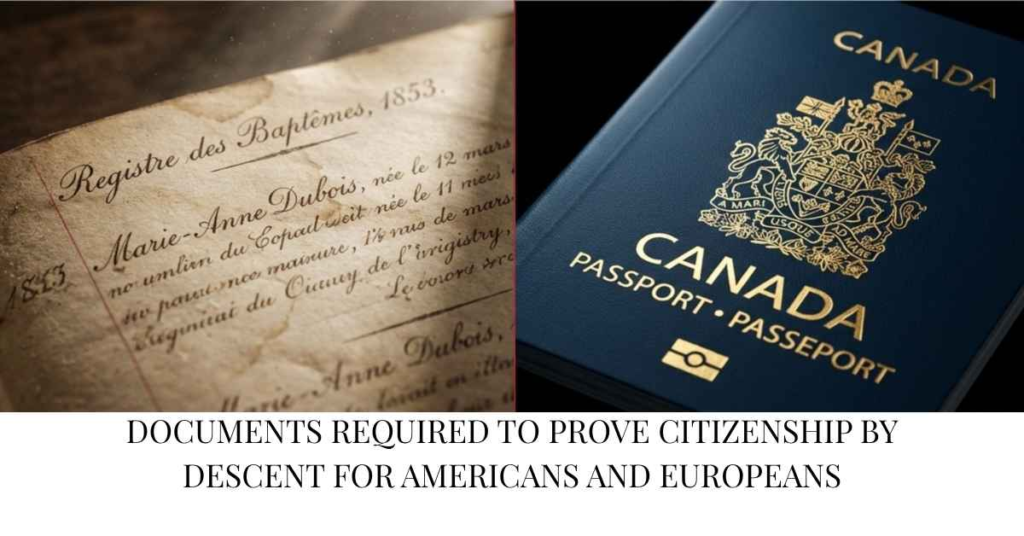
Canadian Citizenship by Descent: Complete Document Guide (Bill C-3 2025)
Baptismal Records for Canadian Citizenship by Descent: 2026 Guide
Baptismal Records for Canadian Citizenship by Descent: A Complete Ordering Guide (2026) LAST UPDATED: AUGUST…
Six Wrong Reasons People Rule Themselves Out of Canadian Citizenship by Descent
Six Wrong Reasons People Rule Themselves Out of Canadian Citizenship by Descent By Amir Ismail,…

Married to a Brand-New Canadian Citizen? What Descent Does (and Does Not) Do for You
Married to a Brand-New Canadian Citizen? What Canadian Citizenship By Descent Does (and Does Not)…
Canadian Vital Records for Citizenship by Descent: How to Find the Right Office in Every Province
Mandatory Vital Records for Canadian Citizenship by Descent (Canada‑Wide: Every Province, Every Office) By Amir…
Ancestor Birth Record Missing? IRCC Alternatives 2026
When the Birth Certificate Never Existed: Proving Your Canadian Ancestor’s Identity to IRCC By Amir…
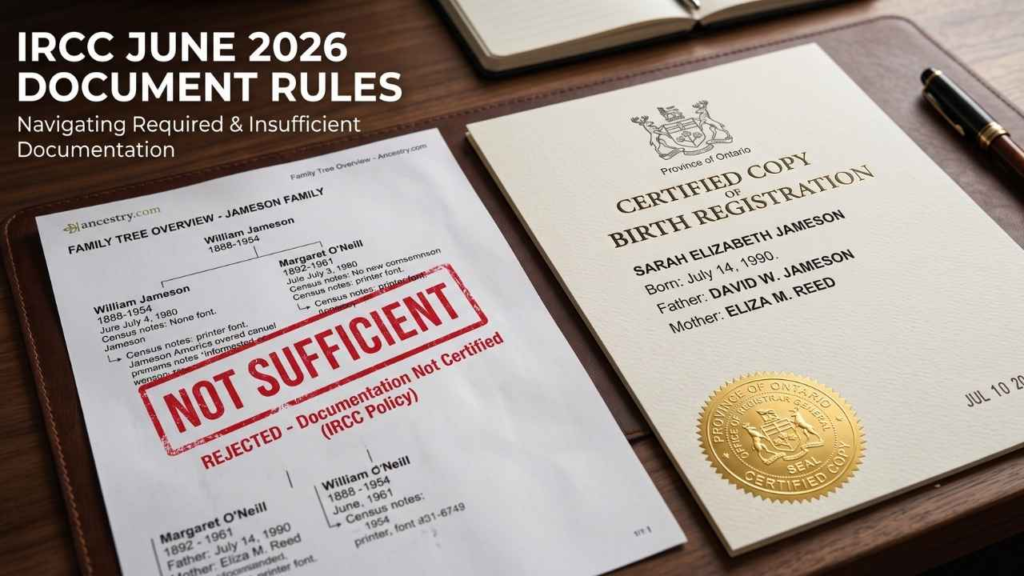
Ancestry Printouts Are Out: The Document Rules IRCC Rewrote for Citizenship by Descent in June 2026
Ancestry Printouts Are Out: The Document Rules IRCC Rewrote for Citizenship by Descent in June…
Canadian Citizenship by Descent Documents 2026: IRCC Rules to Avoid Refusal
Canadian Citizenship by Descent Documents 2026: New IRCC Rules You Must Follow By Amir Ismail…
Citizenship Certificate Surrender Notice Under Bill C‑3 (IRCC 2026): What It Means and What to Do
Citizenship Certificate Surrender Notice Under Bill C-3: What It Means and What to Do Last…
Search of Citizenship Records: How to Confirm Your Ancestor’s Canadian Citizenship
Search of Citizenship Records: How to Confirm Your Ancestor’s Canadian Citizenship By Amir Ismail, RCIC…

Canadian Citizenship by Descent for War Brides & Military Families (Bill C‑3, 2026)
Canadian Citizenship by Descent for War Brides & Military Families (Bill C‑3 Guide, 2026) LAST…
Lost Canadians: Reclaim Your Roots | Citizenship By Descent
The Lost Canadians: How Bill C-3 Finally Gave Families Their Birthright Back By Amir Ismail,…

French-Canadian Ancestry & Canadian Citizenship by Descent (2026)
French-Canadian Ancestry and Bill C-3: What Americans With Quebec Roots Need to Know LAST UPDATED:…
Canadian citizenship certificate urgent processing guide
How to apply for urgent processing of a Canadian citizenship certificate By Amir Ismail, RCIC…

Canadian citizenship by descent: what Americans and Europeans need to know about Bill C-3
Canadian citizenship by descent: what Americans and Europeans need to know about Bill C-3 By…