



















Immigrate to Canada From France With a Licensed RCIC Who Gets It Right the First Time
Last Updated: October 2026
French citizens can immigrate to Canada through Express Entry, provincial nominee programs, spousal sponsorship, or study-to-PR pathways. RCICs Amir Ismail (R412319) and Rijah Amir (R731353) tell you which one fits your profile before you spend on tests or fees.
French citizens can use Express Entry, provincial programs, spousal sponsorship or study-to-PR. Amir Ismail (R412319) and Rijah Amir (R731353) tell you which one fits before you spend on tests.
Why do many Canada applications from France stall or get refused?
Many stalled applications trace back to the file, not the person: mismatched documents, unclear work history, unexplained funds or unlicensed agents.
You can be fully qualified and still be stuck. The problem is rarely your ability. It is a file built on guesswork, and guesswork shows up in small, expensive ways.
Here is what that looks like:
- Your IELTS result expires while you wait for an invitation, because language results are valid for two years
- Your degree has not been assessed, so your profile starts weaker than it should
- Birth, marriage or work records show different spellings or dates
- Bank deposits arrive with no paper trail
- A police certificate lands after the 60-day deadline
- An agent promised approval, then stopped answering
Underneath the paperwork, it feels like dread. Another year gone. Savings spent. A family waiting on an answer you cannot control. You start to wonder if you are being sold a story.
You do not have to carry that. A licensed RCIC can find these problems before IRCC does.
Who will handle your Canada application, and can you trust them?
Check any consultant on the College of Immigration and Citizenship Consultants public register. Amir Ismail holds licence R412319.
We know how heavy it feels to plan a family’s future on advice you cannot check. You want a person with a licence, a name and a straight answer, not a sub-agent you never meet.
Amir Ismail founded this firm in 1991. In 35+ years, AIA has served 25,000+ clients from offices in Toronto and Dubai. Amir and Rijah Amir hold CICC licences you can check yourself, and AIA won the 2026 Canadian Choice Award in Consulting.
We believe a French applicant should never pay for guesses. You should know your route, your documents and your timeline before you spend on tests, and you should be able to check who advises you.
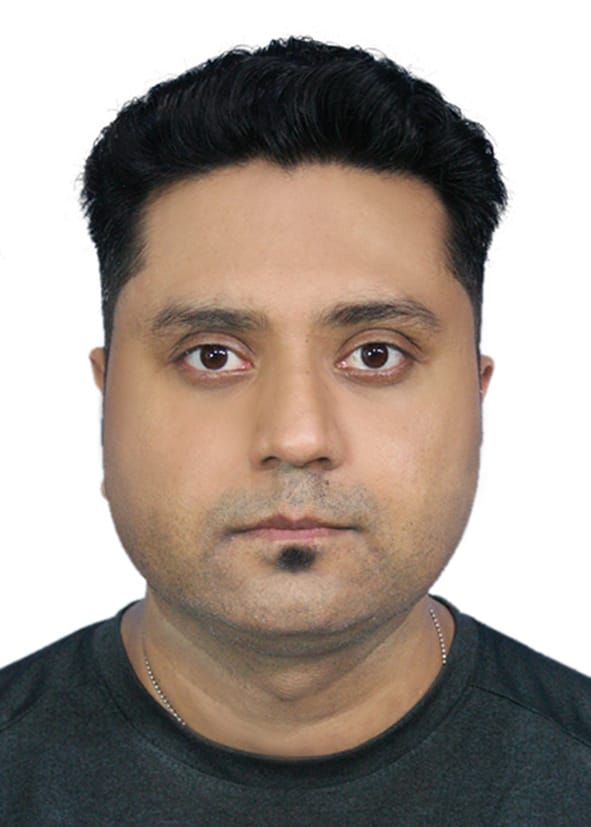
Amir Ismail, RCIC R412319, Founder
Years in practice
Clients served
Firm founded
Offices: Toronto, Dubai
Media that has featured Amir Ismail


Which route can a French citizen use to immigrate to Canada?
French citizens can immigrate to Canada through Express Entry, provincial nominee programs, spousal sponsorship, or study-to-PR pathways.
Your best route depends on your age, language level, education, work history and family ties. Pick the card that matches your life today. We compare them with you in your Strategy Consultation.
Express Entry, for skilled workers
Build a profile, earn a CRS score and wait for an invitation. IRCC also invites candidates by occupation category, so your job can matter as much as your score.
Provincial nominee programs, for skilled workers
A provincial nomination adds 600 CRS points or opens a separate route to PR. That can turn a score that is too low into an invitation.
Spousal sponsorship, for couples
A Canadian citizen or permanent resident can sponsor a spouse or partner who lives in France. We check your relationship evidence before you file, so the package tells one consistent story.
Parents and grandparents, for families in Canada
Parents can visit on a visitor visa or the Super Visa. France is on IRCC’s eTA-required list, so you need an eTA to fly to Canada.
Study in Canada, for students
Study at a Canadian institution, earn a post-graduation work permit and build Canadian experience toward PR. The program you choose can protect or hurt that path.
Work permits, for people with a job offer or a skill in demand
Employer-backed, LMIA-exempt and open permits each have different rules. We match your job offer and profile to the permit that fits. French citizens may also use International Experience Canada, CETA or Francophone Mobility.
Business and entrepreneur routes, for owners and investors
No federal business program is open. Provincial entrepreneur streams and the C11 work permit are the main routes, and we compare them with options abroad.
Permanent residents living abroad
Already a PR but living outside Canada? Check how many days you must spend in Canada before you travel or renew your card.
A refused visa, permit or application
A refusal is not always final. See why files are refused, how to answer a procedural fairness letter and when to reapply.
Not sure where you fit? Try the CRS score calculator or the Express Entry eligibility checker, then bring the result to your Strategy Consultation.
What do French citizens need to know before they apply?
These points come from IRCC pages we checked in October 2026. They change how you visit, study or work in Canada while you plan your route to permanent residence.
- Entry to Canada: France is on IRCC’s eTA-required list. You are visa-exempt, but you need an eTA to fly to or through a Canadian airport.
- International Experience Canada: French citizens can apply under IEC in three categories: Working Holiday, Young Professionals and International Co-op (Internship). IRCC says to select Young Professionals if you apply under a Volontariat international en entreprise (VIE). Read our IEC guide.
- Work permits: Canada has two free trade agreements with France: CETA and GATS. Some French professionals, investors and trainees may work in Canada under CETA without an LMIA. See our CETA guide.
- French language points: French is an advantage in Express Entry. IRCC awards up to 50 extra CRS points for strong French and has held category-based rounds for French-language proficiency. Read our French Express Entry guide.
- Francophone Mobility: If you speak French at NCLC 5 or higher in speaking and listening and have a job offer outside Quebec, you may qualify for a Francophone Mobility work permit without an LMIA. Read our Francophone Mobility guide.
Source: IRCC, checked October 2026.
Is immigrating to Canada from France right for you right now?
Many profiles fit a route, but not every profile fits Express Entry. A licensed RCIC checks age, language, education and work history first.
A good fit if you have
- A route that matches your life: skilled work, a spouse or parent in Canada, a study offer or a business plan
- Documents that match your story, such as work letters, degrees and civil records
- A language test result, or a plan to take the test your route needs
- Funds and records that support your application
- Time to follow a plan and meet every deadline
Consider another route, or wait, if
- You expect a guaranteed approval. Nobody can promise one
- You cannot document your work history, studies or relationship
- You plan to rely on a job offer for CRS points. IRCC removed job offer points on March 25, 2025, although you should still list valid job offers in your profile
- You want to skip required tests or checks
Not on the list? You still have options. We will tell you honestly in your consultation which route fits, and what to fix first.
What do you get when AIA handles your Canada file?
You get a licensed RCIC, a written plan and direct access to the people who sign your file, from your first call to IRCC’s decision.
What AIA does for you
| What you get | What it does for you | What it means for you |
|---|---|---|
| A 30-minute Strategy Consultation with a licensed RCIC | Your best route is chosen from every Canadian option | You stop guessing and know your next three moves |
| A document check before you file (names, dates, work letters, civil records) | Problems are caught before IRCC sees them | You file with fewer surprises waiting after you submit |
| Direct access to Amir and Rijah, not a sub-agent | Answers come from the person accountable for your file | You always know who to call |
| A language, credential and timing plan | Tests and assessments are booked in the right order | Your results do not expire while you wait |
| Your spouse and children in the plan | One strategy covers the whole family | Your family moves forward together |
How does the Canada application process work?
The process has three steps: a 30-minute consultation with a licensed RCIC, a built and filed application, then IRCC’s decision and landing.
Step 1: Book a Strategy Consultation
Spend 30 minutes with a licensed RCIC. We review your profile, map your route and give you a written plan. That means you know exactly what to do first.
Step 2: We build and file your application
We plan your tests and assessments, check every document, prepare the forms and track your deadlines. You complete the medical exam, police certificates and biometrics, and we keep your file consistent. That means the heavy lifting is ours, and you stay focused on work and family.
Step 3: IRCC decides, and we plan your landing
IRCC makes the decision, and we help you prepare for arrival and settlement. That means you arrive with a plan, not a surprise.
Nobody can guarantee approval. IRCC’s service standard for Express Entry is about six months from a complete application.
What documents do French applicants need for Canada PR?
Core documents are a valid passport, civil records, police certificates, an education assessment, language results and proof of funds.
Good files start with good documents. Every route needs the core set below, and your route adds extras.
Passport and civil records
You need a valid passport and civil records that show your name, birth and family details. Make sure names, spellings and dates match your passport and each other, and fix any mismatch before you apply. Documents not in English or French need a certified translation.
Does your French degree count?
Yes, if an IRCC-designated organization assesses it.
To count your degree, you need an Educational Credential Assessment (ECA) from an IRCC-designated organization such as WES or ICES. The assessment tells IRCC how your degree compares with a Canadian one.
Each organization sets its own document rules. Check your chosen organization’s current list first, then order transcripts early. See our ECA guide.
Language results
Skilled routes need IELTS General Training, CELPIP, TEF or TCF results. Results expire after two years, so timing matters. CLB 7 equals 6.0 in each IELTS skill. Higher scores earn far more CRS points. See our language test guide.
Medical exam and biometrics
An IRCC-approved panel physician performs your medical exam. For Express Entry, IRCC no longer requires it upfront, as of October 1, 2023, but you will need it later. Ask us when to book. You also give fingerprints and a photo at a visa application centre for most applications.
Proof of funds
The amount depends on your family size, and IRCC updates it each year. Officers want to see where your money came from, so keep statements, sale records and gift deeds organized. See our proof of funds guide and how to prepare a bank statement for a Canada visa.
Proof for your route
Spousal sponsorship needs relationship proof. Study permits need a letter of acceptance and funds. Visitor visas need ties and funds. Business routes need a plan and proof of net worth. Our documents checklist covers the full list for skilled workers.
Not sure which documents apply to you?
How much does it cost to immigrate to Canada from France?
Government fees for one adult on Express Entry total $1,590 CAD: a $990 processing fee plus the $600 right of permanent residence fee.
Government and third-party costs
| Cost item | Amount (CAD) |
|---|---|
| IRCC processing fee, principal applicant (economic class) | $990 |
| Right of permanent residence fee, per adult (you and an accompanying spouse or partner) | $600 |
| IRCC processing fee, accompanying spouse or partner | $990 |
| IRCC processing fee, dependent child (no right of permanent residence fee) | $270 |
| Biometrics | $85 per person, up to $170 for a family |
| Language test | $300 to $400 |
| Educational Credential Assessment | $200 to $300 |
| Medical exam | $200 to $450 per person |
| Police certificate | Set by the issuing authority |
Test, assessment and medical amounts are typical ranges and vary by provider.
Worked example, a couple with one child: processing fees $990 + $990 + $270 = $2,250. Right of permanent residence fee $600 x 2 adults = $1,200. Government total $3,450 CAD, before biometrics, tests, assessment, medicals and police certificates.
Source: IRCC fees effective April 30, 2026. Confirm today’s amounts before you pay. See our PR fees guide and the cost of immigrating to Canada.
The cost of getting it wrong: if a file comes back incomplete or is refused, the time and test results you used can be lost, and a new application means new fees.
How many French citizens become permanent residents of Canada each year?
Citizens of France in Canada, by year
| Measure | 2021 | 2022 | 2023 | 2024 | 2025 | 2026 (Jan to Jul) |
|---|---|---|---|---|---|---|
| Permanent resident admissions | 12,690 | 14,150 | 10,075 | 9,945 | 11,970 | 4,295 |
| Study permit holders (permit became effective that year) | 19,985 | 16,600 | 15,380 | 13,685 | 13,315 | 4,200 |
| IMP work permit holders | 24,365 | 27,480 | 32,075 | 24,535 | 20,520 | 15,520 |
| TFWP work permit holders | 1,790 | 2,115 | 3,610 | 4,000 | 2,970 | 2,070 |
Source: IRCC open data, data through July 2026, refreshed automatically each month. IRCC rounds numbers to the nearest 5, and -- means a very small number. The last column covers the current year to date only.
In 2025, 11,970 French citizens were admitted as permanent residents, 2,025 more than in 2024. That is a 20.4% rise (2,025 ÷ 9,945). So far in 2026, admissions are running lower: 4,295 from January to July is about 614 a month, against about 998 a month in 2025.
IMP work permit holders from France reached 15,520 in the first 7 months of 2026. That equals 75.6% of all of 2025 (15,520 ÷ 20,520).
These numbers describe groups of people, not your chances. We cannot tell you from this data why they changed. Your profile, your language results and the route you choose decide your result.
Source: IRCC open data, through July 2026. IRCC rounds numbers to the nearest 5.
What our clients say
See our 1,000+ verified Google reviews: Toronto HQ (89 reviews) | Karachi (970+ reviews) | Dubai (51 reviews)
Canada immigration from France: your questions answered
How do I know a Canada immigration consultant is licensed?
Check any consultant on the College of Immigration and Citizenship Consultants public register. Amir Ismail holds licence R412319.
Rijah Amir holds RCIC-IRB licence R731353. Only licensed consultants and lawyers can represent you, and anyone who guarantees approval is a warning sign.
Will this work for my profile if I am older, have a lower IELTS score or gaps in work history?
Many profiles fit a route, but not every profile fits Express Entry. A licensed RCIC checks age, language, education and work history first.
If Express Entry is not your best route, we say so and look at provincial, family, study or other options. Start with our CRS score calculator to see where you stand.
How much does Canada PR cost from France?
Government fees for one adult on Express Entry total $1,590 CAD: a $990 processing fee plus the $600 right of permanent residence fee.
A spouse adds the same two fees, and each dependent child adds $270. Tests, assessments, medicals and police certificates cost extra. Fees change, so confirm them on the PR fees page.
How long does Canada PR take from France?
IRCC’s service standard for Express Entry is about six months from a complete application. The wait for an invitation depends on your CRS score.
Your timeline has three parts: preparing tests and documents, waiting for an invitation and IRCC processing. See current Express Entry processing times.
Can I apply for Canada PR from France?
Yes. You can apply for Canadian permanent residence from France through Express Entry, provincial nominee programs, or family sponsorship.
You do not need to be in Canada, but you must qualify and document your profile. IRCC runs Express Entry, and provinces run their own nominee programs.
What IELTS score do I need for Canada PR?
CLB 7, the usual minimum for skilled routes, equals an IELTS General Training score of 6.0 in each of listening, reading, writing and speaking.
Higher scores earn far more CRS points, so competitive profiles aim well above the minimum. Language results expire after two years. See our language test guide.
Do I need a job offer to get Canada PR from France?
No. Express Entry does not require a job offer, and since March 25, 2025 a job offer no longer adds CRS points. A nomination adds 600.
IRCC still asks you to list valid job offers in your profile so you stay eligible for some programs. See our job offers and Express Entry guide.
Are French degrees accepted for Canadian immigration?
Yes. French degrees count after an Educational Credential Assessment from an IRCC-designated organization such as WES or ICES.
Each organization sets its own document rules, so check them before you start. See our ECA guide.
How long do I have to submit my application after an Express Entry invitation?
After an Express Entry invitation you have 60 days to submit a complete application with all supporting documents, including police certificates.
Start your police certificates as soon as you enter the pool, so a delay does not cost you your invitation. See our guide to the invitation to apply.
Can my spouse and children apply with me?
Yes. Your spouse and dependent children can join your application. Each family member completes a medical exam, and adults add police certificates.
Your spouse can add CRS points if they qualify. Adding family members adds IRCC fees. See our spousal sponsorship guide if your spouse is the one living in Canada.
Who will handle my file if I live in France?
Toronto-based RCICs Amir Ismail and Rijah Amir handle every file directly by Zoom or phone, with an office in Dubai.
You can book from anywhere in France. See our team page and accreditations.
Do French citizens need a visa or an eTA to visit Canada?
French citizens do not need a visa, but they need an eTA to fly to or through a Canadian airport. France is on IRCC’s eTA-required list.
You do not need an eTA if you arrive by land or sea. Apply for the eTA before you travel.
Do my French documents need translation?
Only if a document is not in English or French. Submit the original with a translation from a certified translator, as IRCC requires.
Keep names and dates identical across the original and the translation. A mismatch can lead to a procedural fairness letter. See our PFL guide.
I am a permanent resident living in France. Can I lose my PR status?
A permanent resident must be physically in Canada at least 730 days in every five-year period, or risk losing PR status.
If you are behind, speak to a licensed consultant before you travel or renew your PR card. Read our residency obligation guide.
My Canada visa or permit was refused. What can I do?
A refusal is not always final. Read the refusal reasons, then reapply with stronger documents or answer any procedural fairness letter.
Respond quickly, because deadlines are short. See our refusals and inadmissibility guide and the visitor visa refused guide.
What does waiting cost you?
Waiting costs you time, test results and possibly points, because IRCC rules, fees and your own age points change without warning.
Rules and fees change without warning. IRCC removed CRS points for job offers on March 25, 2025, and raised permanent residence fees on April 30, 2026. Language results expire after two years, and age points fall as you get older.
Every month spent on the wrong route is a month your family waits. A plan now lets you act when the right round or window opens.
Now picture the other ending. Your documents match. Your route is settled. You hold your confirmation of permanent residence with your family beside you. You feel relieved, confident and ready to land.
Know your route before you spend on tests
30 minutes with Amir Ismail or Rijah Amir. Your route mapped. A written plan you keep.
RCIC R412319 | CICC | CAPIC | Since 1991 | Toronto, Dubai
Not ready to book yet?
Check your eligibility by using one of our assessment tools.
Amir Ismail is a Regulated Canadian Immigration Consultant (RCIC R412319) who has been associated with the immigration consulting industry since 1991.
Last updated: October 2026. Source: IRCC.