Rural Community Immigration Pilot
For skilled workers who want to settle in a smaller Canadian community

Rural and Francophone Community Immigration Pilots: Apply for PR in 18 Communities

The Rural Community Immigration Pilot and the Francophone Community Immigration Pilot offer permanent residence to skilled workers who want to work and live in one of 18 selected communities. You need a job offer from a designated employer, a community recommendation, and the right experience, education and language. We check your offer and your community before you pay for tests.

30 minutes with Amir. Your pathway mapped. A written plan you keep.
Clients of Amir Ismail and Associates with a five-star rating
Trusted by 25,000+ families
since 1991
Community Immigration Pilots at a glance
Job offer
Full time, from an employer designated by the community
Experience
1,560 hours in the last 3 years, or a community graduate
Language
Rural: CLB 4 to 6 by TEER. Francophone: NCLC 5 in French
IRCC fee
$1,590 per adult, including the $600 right of PR fee
Proof of funds
Rural pilot from $10,507, unless you already work in Canada on a valid work permit
2026 Canadian Choice Award
Independently verified excellence
35+
Years in practice
25,000+
Families approved
RCIC #R412319
2 licensed RCICs
As featured in
Media outlets and publications that have featured Amir Ismail's immigration consulting expertise

What are the Community Immigration Pilots?

The Rural Community Immigration Pilot (RCIP) and the Francophone Community Immigration Pilot (FCIP) are community-driven routes to permanent residence. Each of the 18 participating communities designates employers and recommends candidates (IRCC, Aug 2026).

There is no Express Entry profile and no CRS score. Your employer sends your recommendation application to the community, and you then apply to IRCC.

Do I need a job offer?

Yes. The offer must come from an employer designated by the community. The job must be inside the community boundaries and full time (30 or more paid hours a week), year-round and with no end date.

Why workers choose the pilots

  • No CRS ranking: your job offer and community recommendation lead the way
  • A lower language bar: rural CLB 4 to 6 by TEER, Francophone NCLC 5 in French
  • Graduate exemption: graduates of public post-secondary schools in the community can skip the work experience rule
  • Work permit option: an LMIA-exempt permit valid for 2 years while your PR is processed

Are the Community Immigration Pilots right for you?

An honest check before you ask an employer to apply or pay for tests.

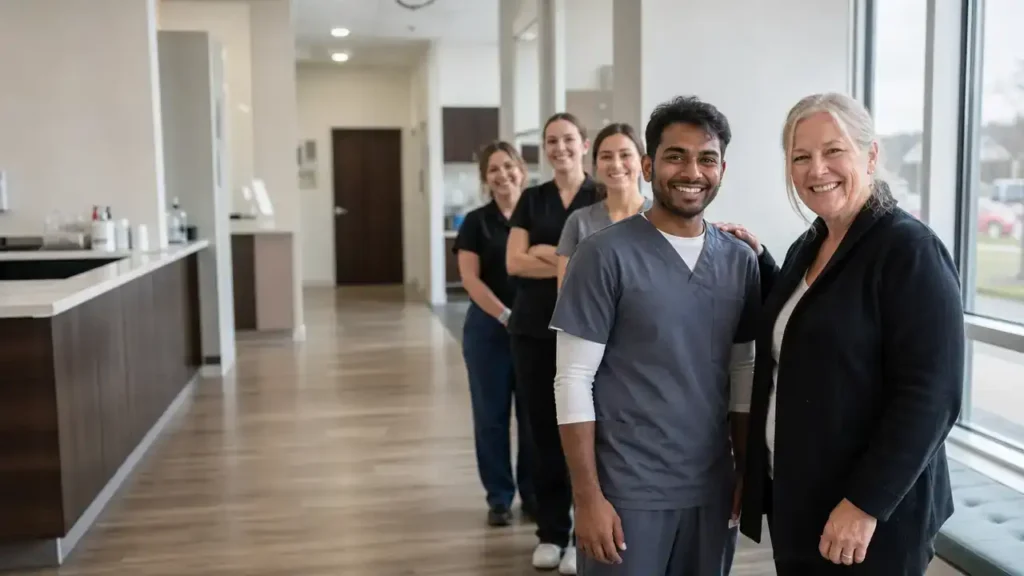
Newcomer welcomed by a designated local employer under the Rural Community Immigration Pilot

A good fit if you have

  • A full-time job offer from an employer designated by one of the 18 communities
  • 1,560 hours of paid, related work in the last 3 years, or community graduate status
  • Rural CLB 4 to 6 by TEER, or NCLC 5 in all four French abilities
  • At least a high school diploma, backed by an ECA if your credential is foreign

Consider another route if

  • You want to live in a large city: Express Entry or a provincial nominee stream may fit
  • You have a job offer in New Brunswick, Nova Scotia, Prince Edward Island or Newfoundland and Labrador: the Atlantic Immigration Program may fit
  • Your employer is not designated by a participating community: ask them to contact the community first

Community pilot minimum requirements

You must meet every minimum before your employer asks the community for your recommendation. You then apply for permanent residence with IRCC.

Job offer

A full-time (30+ hours a week), year-round offer with no end date, inside the community boundaries, from an employer the community has designated.

Work experience

1,560 hours of paid, related work in the last 3 years, in a TEER that matches your offer. Self-employment does not count. Community graduates can be exempt.

Language

Rural: CLB 6 for TEER 0 or 1, CLB 5 for TEER 2 or 3, CLB 4 for TEER 4 or 5. Francophone: NCLC 5 in all four abilities with TEF Canada or TCF Canada. Results must be under 2 years old.

Education

A Canadian high school diploma or higher, or a foreign credential with an ECA that is less than 5 years old on the day you apply.

Proof of funds

The rural pilot asks for $10,507 for 1 person, up to $27,806 for 7, plus $2,831 for each extra member (IRCC, July 2025). You do not need funds if you already work in Canada on a valid work permit.

Community recommendation required

Your employer sends your recommendation application to the community. It checks that your job is in a priority sector and the offer is real.

How the Community Immigration Pilots work

Designated employers

Employers contact their community to get designated and to hire in priority sectors. Each community lists its designated employers and jobs on its own website.

Community recommendation

The community reviews your job offer and your eligibility. If it approves, you can apply to IRCC for permanent residence.

Work permit while you wait

You can apply for an optional work permit with no LMIA, valid for 2 years and tied to your employer. You need an eligible offer and a community recommendation. Your spouse may get an open work permit limited to the same community.

Graduates of community schools

You can skip the work experience rule if you graduated from a public post-secondary school in the community. You need a program of 2 years or more, full-time study and a credential from the last 18 months. Programs that were half or more language study or distance learning do not count.

Your TEER match

A TEER 0 or 1 offer accepts experience from TEER 0 to 3. A TEER 2 offer accepts TEER 1 to 4. A TEER 3 or 4 offer accepts TEER 2 to 4. A TEER 5 offer needs the same 5-digit NOC code.

18 participating communities

Rural (14): Pictou County NS; North Bay, Sudbury, Timmins, Sault Ste. Marie and Thunder Bay ON; Steinbach, Altona/Rhineland and Brandon MB; Moose Jaw SK; Claresholm AB; West Kootenay, North Okanagan Shuswap and Peace Liard BC.

Francophone (6): Acadian Peninsula NB; Sudbury, Timmins and Superior East ON; St. Pierre Jolys MB; Kelowna BC.

Your application package

Every document must be current and complete. A missing item can delay your file.

Language test results

English: CELPIP-General, IELTS General Training or PTE Core. French: TEF Canada or TCF Canada. Results must be under 2 years old on the day you apply.

Job offer and recommendation

Your written job offer from the designated employer and your community recommendation.

Work reference letters

Letters that show your dates, duties, NOC code, salary, hours per week and employer contact details.

Police certificates

Certificates from the countries where you lived for a long period, as your IRCC checklist lists them.

Proof of funds

Bank statements, bank drafts, cheques or money orders. The money must be available when you apply and when your visa is issued. Not needed if you already work in Canada on a valid work permit.

Want your file reviewed?

We check your employer’s designation, your hours, your TEER match and your documents before you apply.

How the community pilots work, step by step

Six stages from your first check to your PR application.

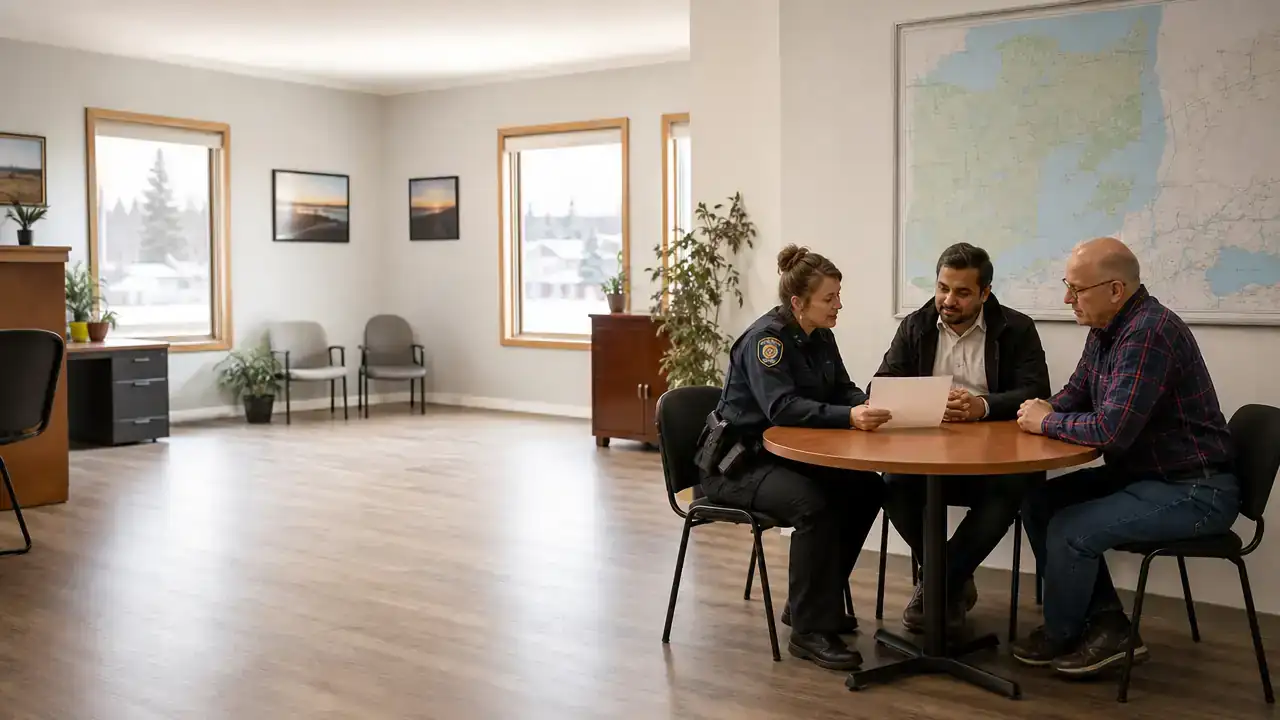
Community officer reviewing a community recommendation form with an employer and a newcomer worker
1
Before you pay

Check your fit

We test your job offer, community, hours, education and language against the pilot minimums.

2
Often the longest step

Find a community and an employer

Pick a participating community and an employer it has designated. Each community lists employers and jobs on its own website.

3
With the community

Get your community recommendation

Your employer sends your recommendation application to the community. The community checks the offer and your eligibility.

4
Required

Prepare your tests and documents

Take your language test, order an ECA if your credential is foreign and collect your reference letters.

5
Documents and fees

Submit your PR application

Create your IRCC account, follow the document checklist, pay the fees and submit. A medical exam is part of the process.

6
After you apply

Decision and PR

IRCC reviews your file and decides. If approved, you become a permanent resident and live in your community.

Ways to strengthen your pilot file

Meeting the minimums gets your file moving. These five steps make it stronger.

Language

Test early. A score above the minimum protects you if one skill falls short or a result expires.

Education

Order your ECA early if your credential is foreign. It must be less than 5 years old when you apply.

Your family

Your spouse and children can be included. Funds depend on your family size, so plan early.

Your employer

Check that your employer is designated by the community and committed before you spend money on tests.

Your NOC and TEER

Choose the NOC that matches your real duties and the TEER of your offer. A mismatch can delay or sink your file.

Want a second set of eyes?

We follow your file from your first check to your PR application.

Costs and timelines

Typical costs for a single applicant, confirmed during your consultation because government fees change.

IRCC fee per adult
$1,590 per adult, including the $600 right of PR fee
Spouse or partner
$1,590 when you include them
Dependent child
$270 per child
Biometrics, if required
$85 per person
Language test
$300 to $400
IRCC fees per adult (processing + Right of PR fee)
From $1,590 CAD
Full journey, first check to PR
Employer designation, community recommendation, then IRCC processing

Check your pilot eligibility in 2 minutes

Answer 7 short questions. The tool checks the main pilot minimums. It is general guidance, not a decision, and it does not confirm your employer designation.

Amir Ismail, RCIC R412319, founder of Amir Ismail & Associates
“My mission is simple: to help you build a future in Canada with clarity, confidence, and credibility.”
Amir Ismail, RCIC #R412319 · Founder

Why clients choose Amir Ismail & Associates

35+ years of hands-on immigration experience and 25,000+ successful cases, from offices in Toronto, Dubai and Karachi. Our team includes Rijah Amir, also a licensed RCIC, so every file gets a second expert review.

Licensed expert guidance

Advice from CICC-licensed RCICs, not sales staff or unlicensed agents.

A strategy built for your profile

We identify the fastest realistic pathway for you, not a template.

Application accuracy

Documentation review that prevents costly errors and refusals.

Timely updates

We track every draw, policy shift and IRCC announcement for you.

End-to-end support

From eligibility checks to landing, we guide every step.

Proven track record

2026 Canadian Choice Award winner, trusted since 1991.

What our clients say

Real reviews from clients we have guided to Canada and beyond.

Community Immigration Pilots FAQs

They are community-driven routes to permanent residence for skilled workers who want to work and live in one of 18 participating communities. Each community designates employers and recommends candidates. You then apply to IRCC for PR (IRCC, Aug 2026).

Fourteen rural communities: Pictou County NS; North Bay, Sudbury, Timmins, Sault Ste. Marie and Thunder Bay ON; Steinbach, Altona/Rhineland and Brandon MB; Moose Jaw SK; Claresholm AB; and West Kootenay, North Okanagan Shuswap and Peace Liard BC. Six Francophone communities: Acadian Peninsula NB; Sudbury, Timmins and Superior East ON; St. Pierre Jolys MB; and Kelowna BC. Sudbury and Timmins are on both lists.


Yes. It must come from an employer designated by the community and be inside the community boundaries. It must be full time (30 or more paid hours a week), year-round and with no end date.

You need 1,560 hours of paid, related work in the last 3 years, in a TEER that matches your job offer. Self-employment does not count. Graduates of public post-secondary schools in the community can be exempt. See the full PR fee breakdown.

The rural pilot needs CLB 6 for TEER 0 or 1 jobs, CLB 5 for TEER 2 or 3 and CLB 4 for TEER 4 or 5 in all four abilities. The Francophone pilot needs NCLC 5 in all four French abilities with TEF Canada or TCF Canada. Results must be less than 2 years old.

You need a Canadian high school diploma or higher. A foreign credential needs an Educational Credential Assessment that is less than 5 years old on the day you apply.

Once you have a job offer from a designated employer, your employer sends your recommendation application to the community. The community checks that your job is in a priority sector, that the offer is real and that you meet the pilot requirements. If it approves, you can apply for PR.

You may be able to. With an eligible job offer from your designated employer and a community recommendation, you can apply for an optional work permit. It needs no LMIA, is valid for 2 years and ties you to that employer.

For the rural pilot, funds start at $10,507 for 1 person and reach $27,806 for 7, plus $2,831 for each additional member (IRCC, July 2025). You do not need proof of funds if you already work in Canada on a valid work permit. The money must be available when you apply and when your visa is issued.

The IRCC fee is $1,590 per adult, including the $600 right of permanent residence fee. A dependent child costs $270 and biometrics cost $85 per person. Budget separately for language tests, medical exams, police certificates and an ECA.