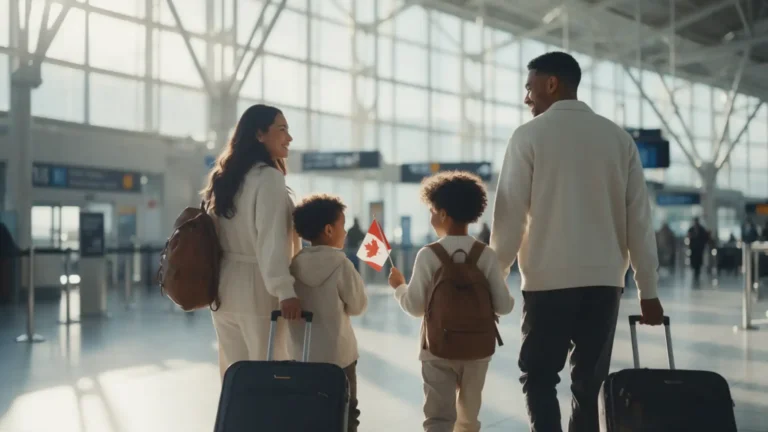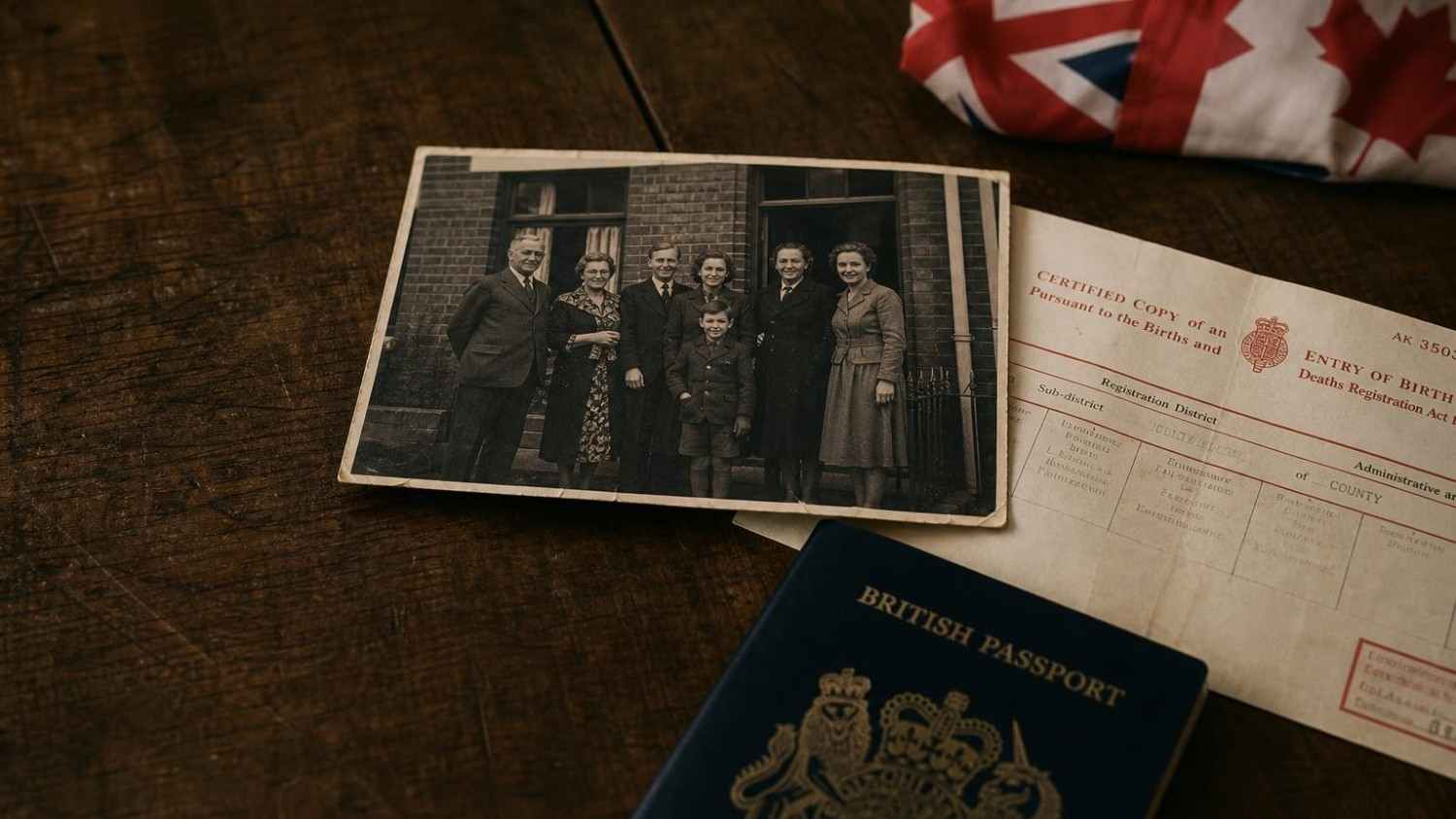
Descendants of British Home Children qualify for Canadian citizenship by descent if their ancestor was ordinarily resident in Canada on January 1, 1947. Under Section 3(1)(m) of Canada’s Citizenship Act and Bill C-3, that legal status restores citizenship retrospectively and transmits down generational lines to American and international descendants without generation limits for those born before December 15, 2025.
Who were the British Home Children?
The British Home Children were over 100,000 children sent to Canada from the British Isles between 1869 and the late 1930s, according to Library and Archives Canada (LAC). Most went from a British emigration agency’s children’s home to a Canadian receiving home. Most were then placed with families in rural Canada.
Many of those children later moved south or had grandchildren born in the United States. LAC records name Dr Barnardo’s Homes as one sending agency, so you may hear the term Barnardo children. If that story is in your family, keep reading.
Am I a Canadian citizen by descent?
Trace your family line one generation at a time. Each link is tested against the law in force when that person was born, so you see exactly where your chain holds and where it breaks. About three minutes, and no account needed.
Check my family lineCan British Home Children descendants claim citizenship by descent?
Yes, in many cases. British Home Children citizenship by descent works when your ancestor became a Canadian citizen. That happened either on January 1, 1947 under the first Canadian Citizenship Act, or later through section 3(1)(m) of today’s Act. Bill C-3 then lets that status pass to people born outside Canada before December 15, 2025.
These are the parts of section 3 of the Citizenship Act that matter most for a home child family line:
- Section 3(1)(m) (Home Child Base Claim): Confers Canadian citizenship on British subjects born outside Canada who were ordinarily resident in Canada on January 1, 1947.
- Section 3(1)(o) & (q) (First Generation Abroad): Transmits citizenship to children born outside Canada prior to January 1, 1947, whose parent acquired citizenship under Section 3(1)(m) or the 1946 Act.
- Section 3(1.3) (Deceased Parent Protection): Protects descendants whose British Home Child parent passed away before January 1, 1947, treating the parent as a citizen if they met residence criteria before death.
- Section 3(3) & Bill C-3 (Generational Limit Lifted): Removes the former first-generation limit (FGL) for all applicants born abroad before December 15, 2025. The 1,095-day substantial connection test applies solely to generations born abroad on or after December 15, 2025.
Each link in the chain still needs its own proof. One missing birth record can stop the whole claim.
What if my home child ancestor moved to the United States before 1947?
This is where many claims fail. Section 3(1)(m) needs your ancestor to be ordinarily resident in Canada on January 1, 1947. A home child who had already settled in the United States by then was not living in Canada that day, so this route may not work. We cannot confirm an outcome without the dates.
Home children were born in the British Isles, not in Canada. That matters, because section 3(1)(k) covers people born or naturalized in Canada before 1947. It does not reach a child born in England or Scotland who left Canada early.
So the first fact to pin down is the year your ancestor crossed the border, if they ever did.
Which records prove British Home Children citizenship by descent?
You need two sets of records. The first proves your home child ancestor arrived and was living in Canada on January 1, 1947. The second proves each birth linking that ancestor to you. LAC holds the arrival records, and your state vital records office holds the American births in the chain.
- Arrival Documentation (LAC): Passenger manifests (1869–1930s), Board of Guardians registers, or Juvenile Inspection Reports from Library and Archives Canada.
- Proof of Canadian Residence on January 1, 1947: Canadian voter lists, census records, land titles, municipal tax rolls, church records, or provincial vital statistics confirming physical residence on this statutory date.
- Vital Statistics Chain: Certified long-form birth certificates and marriage certificates for each intervening generation connecting the applicant to the British Home Child.
- Official Identity Documents: Valid government-issued photo ID and completed IRCC Application for a Citizenship Certificate (Form CIT 0001).
Search the LAC Home Children records by last name, then add a destination or sending agency if you get too many results. For a ship, type the name alone, such as TUNISIAN, not S.S. TUNISIAN. LAC last updated its home children research page on October 5, 2026.
How long does a proof of citizenship application take?
Expect a long wait. Immigration, Refugees and Citizenship Canada (IRCC) listed the proof of citizenship processing time at about 34 months in its October 9, 2026 update. About 130,700 people were waiting. Each family member files their own application, and the fee is $75 per person.
IRCC lets family members mail their files together in one envelope. But if one file is incomplete, IRCC returns them all. Our proof of citizenship processing time guide tracks the queue month by month.
What should Americans with a home child ancestor do first?
Start with dates, not documents. Write down when your home child arrived, where they lived on January 1, 1947, and when each later generation was born. Those dates tell you which part of the Citizenship Act applies. They also tell you whether a claim is worth building before you order a single certificate.
Our citizenship by descent eligibility checklist for Americans walks through the generations step by step. If your line goes back further than the home child, read why ancestors from before 1867 can still count.
For the full rules, see our Canadian citizenship by descent guide, or check official updates on the IRCC website.
If the 1947 date is unclear in your family, Book Your Strategy Consultation and we will review the timeline with you.
Frequently asked questions
Are all British Home Children descendants Canadian citizens?
No, descent from a British Home Child does not grant automatic citizenship. Qualification requires documentary proof that the ancestor was ordinarily resident in Canada on January 1, 1947, alongside complete vital records establishing each subsequent generation.
Did Bill C-3 change the rules for home child families?
Yes, for the later generations. Bill C-3 came into force on December 15, 2025. The first generation limit now applies only to some people born outside Canada on or after that date. The rules for the home child ancestor still come from section 3(1)(m) and the 1946 Act.
Where do I find my ancestor’s arrival record?
Library and Archives Canada holds it. LAC has the passenger lists for home children arriving from 1869 to the 1930s, plus the Board of Guardians register and Juvenile Inspection Reports. Many of its records are digitized and searchable in LAC Collection Search. Search by last name.
How long will IRCC take to process my proof of citizenship?
About 34 months, based on IRCC’s October 9, 2026 processing time update. About 130,700 people were waiting at that point. Posted times change every month, so treat the figure as an estimate, not a promise.